


Argentina’s Dramatic Comeback Win Over Egypt Sparks Outrage Among Critics
By Humayun Kabir Dhali
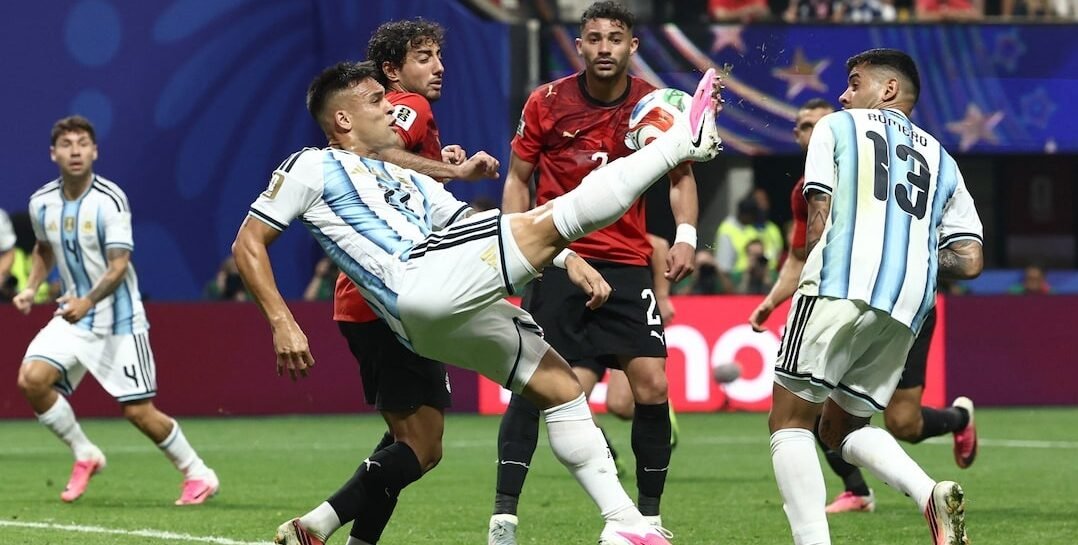
The July 7 clash between Argentina and Egypt turned into a spectacle of high drama and intense controversy. After trailing 2–0, Argentina staged a remarkable comeback, scoring three goals in the final 14 minutes to secure a 3–2 victory and book their place in the quarterfinals. Lionel Messi’s side will now face Switzerland on July 11 in Kansas City. However, beyond the thrilling result, the match has been overshadowed by heated debates over refereeing decisions, sparking widespread criticism both online and offline.
From the opening whistle, both teams displayed attacking intent. Egypt struck early with a well-coordinated offensive move and later extended their lead to 2–0, putting Argentina under immense pressure.
What followed was a stunning turnaround by La Albiceleste. Cristian Romero pulled one back, before Lionel Messi—the “Prince of Rosario”—equalized with a brilliant goal. In the dying moments, Enzo Fernández scored the winner, sending Argentina fans into wild celebrations. Overcome with emotion, Messi was seen in tears after the final whistle. With just three matches remaining, the defending champions are now within reach of making history once again.
Despite the heroic comeback, three major incidents have ignited controversy across the football world, fueling anger among anti-Argentina supporters:
First, when Argentina were trailing 0–2, the referee awarded them a crucial penalty. Egyptian defenders insisted there was no foul, claiming a clean clearance. Even after a VAR review, the decision stood, allowing Argentina to re-enter the match. Meanwhile, Egypt’s two penalty appeals were denied outright.
Second, in the 70th minute, a dangerous tackle by an Argentine midfielder was widely considered worthy of a straight red card. However, the referee issued only a yellow card. Critics argue that had Argentina been reduced to ten men, the outcome could have been very different.
Third, Argentina’s decisive third goal has come under scrutiny for a potential offside. Replays suggested the forward might have been marginally ahead, yet the linesman’s signal allowed the goal to stand, intensifying the debate.
At the center of the controversy is French referee François Letexier. Born in 1989 in Brittany, France, Letexier is a well-known figure in international football. He began officiating in Ligue 1 in 2016 and became a FIFA-listed referee in 2017, later rising to UEFA’s elite category. His resume includes officiating the 2021 Europa League Final, the 2023 UEFA Super Cup Final, the Euro 2024 Final, and the semifinal of the 2025 FIFA Club World Cup.
This is not the first time Letexier has faced criticism. In 2022, he was heavily scrutinized for a controversial VAR decision in a match between Nice and Nantes, where he denied a penalty and issued multiple cards. Prior to this match, he had officiated two games in the current tournament, showing eight yellow cards without awarding any penalties or red cards. However, his decisions in the Argentina-Egypt match have once again placed him under intense scrutiny.
A Storm of Reactions on Social Media
Following the match, social media platforms such as Facebook, X (formerly Twitter), and TikTok have been flooded with reactions. Critics have labeled the match as a “collaboration between the referee and Argentina,” while memes and trolling have gone viral.
“Did the referee just shatter the dreams of a fighting team like Egypt? This is not football—this is a farce!” — read one widely shared comment online.
On the other hand, Argentina supporters have defended the result, praising their team’s resilience and fighting spirit. They argue that decisions regarding fouls and penalties ultimately rest with the referee and VAR, and that Argentina simply capitalized on their opportunities.
While Argentina may celebrate their 3–2 victory on the pitch, the controversy surrounding the match is far from over. Football analysts warn that if such confusion persists even with advanced technologies like VAR, it could undermine the integrity and beauty of the game. For now, all eyes remain on how far this debate will extend beyond the field.