

On the Tuesday, August 4, 2026, episode of The Excerpt podcast: While most Republicans continue to back President Donald Trump, some lawmakers have broken with him on major votes, foreign policy decisions and economic priorities. Are these disagreements simply part of normal governing, or do they signal a deeper shift within the party? USA TODAY Congressional Correspondent Zach Schermele joins The Excerpt to examine the GOP’s internal dynamics and what they could reveal about the party’s future beyond Trump.
Hit play on the player below to hear the podcast and follow along with the transcript beneath it. This transcript was automatically generated, and then edited for clarity in its current form. There may be some differences between the audio and the text.
Dana Taylor:
We’ve seen some Republican lawmakers break with President Donald Trump on specific issues, but how significant is that if they still overwhelmingly support him politically? What’s the difference between policy disagreements and a true political split? Hello, and welcome to USA TODAY’s The Excerpt. I’m Dana Taylor. Today is Tuesday, August 4th, 2026. Joining me for a closer look into the powers that be within the GOP is USA TODAY Congressional Correspondent Zach Schermele. It’s good to have you here, Zach.
Zach Schermele: Thanks so much for having me, Dana.
Dana Taylor: Zach, Republicans stalled Todd Blanche’s nomination despite strong pressure from the White House. The nomination is still in flux, but was that a meaningful sign of GOP independence?
Zach Schermele: It was one of the most notable signs of Republican pushback to a big priority of President Donald Trump’s in the 119th Congress and in the second term of President Donald Trump’s stints in the White House. John Cornyn, a Republican senator from Texas, and Tom Tillis, a Republican senator from North Carolina, both really dug their heels in on two things, the so-called anti-weaponization fund that was set up by the Justice Department as part of an IRS settlement with the Trumps and a tax audit immunity deal that was the source of a lot of consternation within the Senate Republican Conference. And it was really a bridge too far for a lot of Senate Republicans that I spoke to both on the day that it was announced, the weaponization fund and continuing onward.
Get the Daily Briefing newsletter in your inbox.
The day’s top stories, from sports to movies to politics to world events.
And Todd Blanche, the acting Attorney General at the Justice Department gave assurances during his Senate confirmation hearing that the weaponization fund, which Republican senators and a lot of Democrats were worried was going to ultimately give payouts to folks who were involved in the January 6th riots, Blanche said that the weaponization fund was functionally dead, that it never gave any payouts, and that it wasn’t going to be moving forward. But Cornyn and Tillis wanted that in writing. They were folks who were familiar with how the Trump administration operates and with how much of a priority this seemed to be for President Trump. And so they said, “We are not going to vote to confirm you, Todd Blanche, unless you put this in writing.” There was a lot of haggling back and forth about the particulars of that deal, but finally they did get something in writing ahead of the Senate’s last week in session before an over month long recess. And it was a testament to just how much a little bit of pushback, especially from a Senate Republican can go.
Dana Taylor:
If we look at South Carolina’s upcoming Senate race to fill Lindsey Graham’s seat, will that test the strength of Trump’s influence within the Republican Party?
Zach Schermele: Certainly. And I would be surprised to see a candidate that the President has endorsed not succeed.
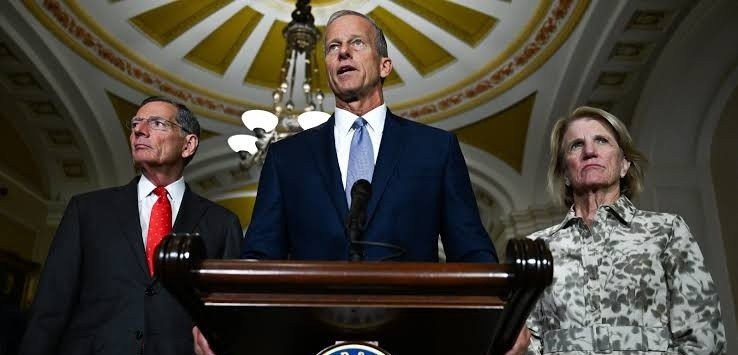
Where GOP Loyalty to Trump is Starting to Fracture