


Special voter roll revision planned in 17 states and union territories; searchable PDF copies to be provided to political parties as controversy over voter deletions intensifies
Shah J. Choudhury:
— India’s Election Commission (ECI) has announced two significant measures amid growing political controversy and opposition protests over the Special Intensive Revision (SIR) of electoral rolls. The commission plans to conduct a Special Summary Revision (SSR) in 17 states and union territories and provide recognized political parties with searchable PDF versions of draft and final voter lists.
According to an October 16 report by India Today, the measures address longstanding demands from opposition parties as criticism of the SIR process continues. However, the commission has not established that the decisions were directly prompted by political pressure.
Voter deletions spark political controversy
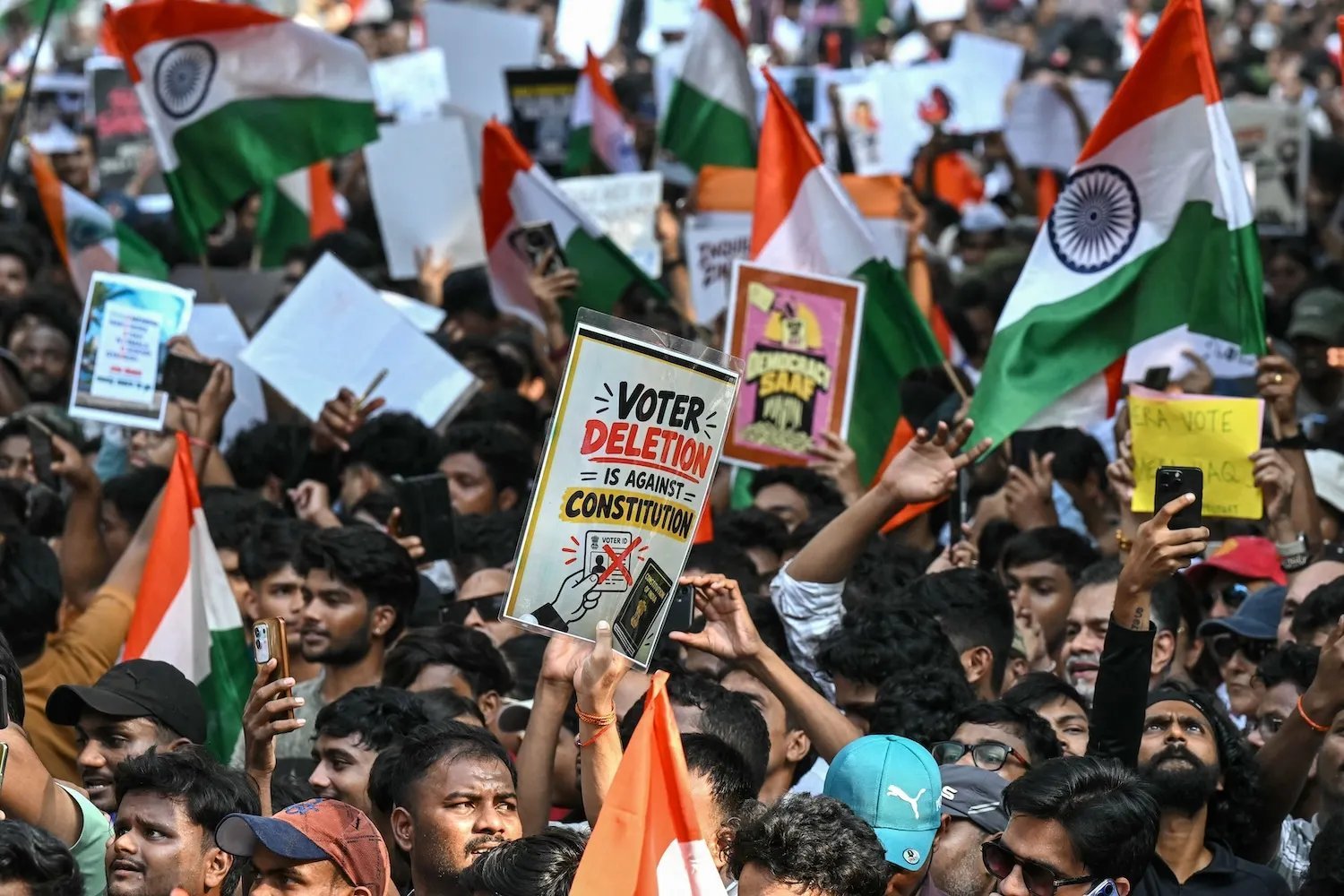
The removal of large numbers of names from electoral rolls during India’s voter verification exercise has intensified political tensions. Opposition parties have raised concerns that eligible voters could be wrongly excluded and have called for greater transparency in the revision process.
According to figures cited in media reports, the deleted entries include records of deceased individuals, voters who have moved elsewhere, and people who could not be located during verification. The Election Commission has maintained that checking such records is necessary to improve the accuracy of electoral rolls.
Congress leader Rahul Gandhi, the Leader of the Opposition in the Lok Sabha, and other opposition figures have alleged irregularities in the voter lists and demanded greater accountability from the commission. Some opposition leaders have also called for the resignation of Chief Election Commissioner Gyanesh Kumar.
The Election Commission has rejected allegations of bias, maintaining that verifying voter records is part of the process of keeping electoral rolls accurate. Individuals whose names have been wrongly removed may seek inclusion again through the applicable procedures.
Special Summary Revision planned in 17 states and union territories
The Special Summary Revision is a routine process for updating electoral rolls. It allows eligible new voters to register, existing voters to correct their details, and election officials to review errors in the lists.
The SIR and SSR processes serve different purposes. The SIR involves a more extensive verification exercise that may include checking existing records against previous electoral rolls and reviewing documents where required. The SSR primarily focuses on routine updates and the inclusion of newly eligible voters.
According to India Today, concerns had emerged over the registration of new voters because the regular SSR process had been affected by the intensive revision exercise. Young people who have recently turned 18 are among those seeking opportunities to register.
The renewed revision process is expected to provide a regular mechanism for updating voter records. However, the announcement does not mean that everyone whose name was removed during the SIR will automatically be restored to the electoral rolls. Each case will remain subject to the applicable registration and verification procedures.
Searchable PDFs to improve access to voter lists
In another significant move, the Election Commission has decided to provide recognized political parties with searchable PDF versions of draft and final voter lists for individual polling stations, alongside printed copies. The digital versions will exclude voter photographs. Information about additions, deletions and corrections is also expected to be made available to political parties.
Previously, many digital voter lists were distributed as scanned PDFs consisting largely of page images. This made it difficult to search for specific names, compare entries and analyze voter records efficiently.
Searchable PDFs are expected to make the verification process easier for political parties. The change could help them identify possible duplicate entries, review deletions and flag discrepancies for further investigation.
The Congress party has sought searchable voter lists since 2018. Before an election in Madhya Pradesh that year, Congress leader Kamal Nath approached the Supreme Court over the issue. At the time, the Election Commission raised concerns about privacy and the potential misuse of voter information.
Rahul Gandhi revived the demand during his 2025 campaign alleging “vote theft,” arguing that scanned PDF files made it difficult to identify potential irregularities.
The commission’s latest decision could improve access to electoral information. However, searchable documents alone cannot establish that irregularities have occurred. Any suspected discrepancies would require further verification.
Dispute reaches the Supreme Court
The controversy over voter roll revisions has also moved into the courts.
According to an October 15 media report, the Supreme Court sought responses from the Election Commission and relevant officials following a petition filed by Rahul Gandhi and 12 other opposition leaders.
The petition sought an independent audit of the process for deleting names from electoral rolls, adequate notice and an opportunity for affected voters to be heard, and interim relief concerning the ongoing revision exercise.
The court’s request for responses should not be interpreted as a final finding that the allegations are true. The legal proceedings remain an important part of the wider dispute over voter verification and electoral transparency.
Protests continue amid political tensions
Protests over the voter revision process have been reported in Delhi and other parts of India.
A Reuters report published on October 16 said Abhijit Deep, founder of the Cockroach Janata Party (CJP) movement, was detained by police in Delhi ahead of a planned demonstration. Protesters were demanding the resignation of the chief election commissioner. Demonstrations were also reported in Mumbai, Bengaluru and Patna.
The BJP has criticized the opposition protests as politically motivated. Opposition parties, meanwhile, argue that transparent voter registration and protection against the wrongful removal of eligible voters are essential to the democratic process.
Implementation will be closely watched
The Election Commission’s latest decisions could change how political parties access and scrutinize electoral records. Whether the measures will ease the opposition’s concerns remains uncertain.
Key issues include ensuring that voters whose names have been removed have an effective opportunity to appeal or re-register, adding newly eligible voters to the rolls, and maintaining transparency throughout the revision process.
The implementation of the new measures, along with further developments in the courts, is likely to remain central to the debate over electoral integrity and public confidence in India’s voting system.