


Husneara Choudhury, New York | June 30, 2026
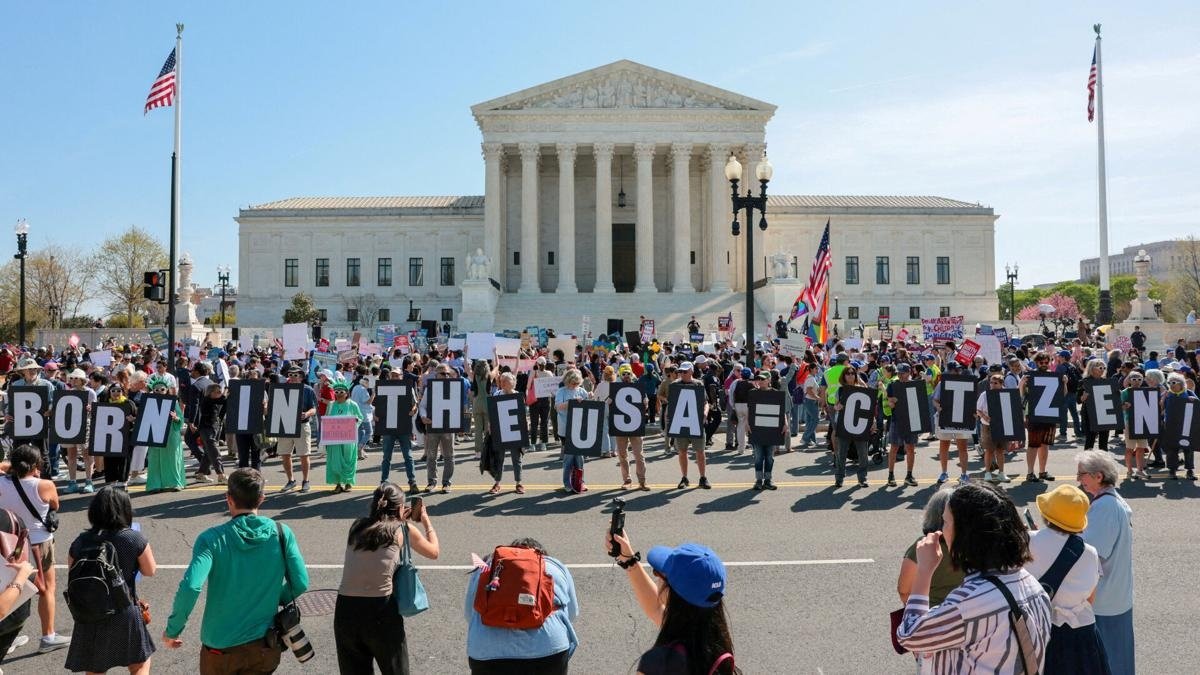
The United States Supreme Court has struck down efforts by former President Donald Trump to limit birthright citizenship, marking a significant ruling on immigration policy and constitutional interpretation.
In its decision, the Court reaffirmed that under the 14th Amendment of the U.S. Constitution, most individuals born on U.S. soil are automatically entitled to citizenship—a long-standing constitutional principle.
Court’s Ruling and Reasoning
In the majority opinion led by Chief Justice John Roberts, the Court held that the executive order proposed by the Trump administration was inconsistent with the Constitution.
The proposal sought to deny automatic citizenship to children born in the United States whose parents were undocumented immigrants or on temporary status. However, the Court rejected this interpretation, maintaining the established legal understanding of birthright citizenship.
Historical Context
The Court referenced the landmark 1898 case Wong Kim Ark, which affirmed that citizenship is granted by birthplace rather than the immigration status of parents.
Legal experts say this ruling reinforces a long-standing constitutional tradition and provides clarity on the interpretation of the 14th Amendment.
Political Reaction
The decision has reignited debate over immigration policy in the United States.
Civil rights and immigrant advocacy groups welcomed the ruling, calling it a victory for constitutional rights and equality. Conservative voices, however, criticized the decision and argued for legislative reform.
Following the ruling, representatives of the Trump camp stated that they would continue to pursue changes through Congress.
Impact and Significance
The ruling ensures that thousands of children born in the United States to immigrant families will continue to receive citizenship rights. Analysts suggest the decision will have long-term implications for U.S. immigration policy and future political debates.
In Summary
The Supreme Court’s decision reaffirms a foundational principle of U.S. constitutional law:
Birth on U.S. soil remains the basis for citizenship under established legal interpretation.