


By Sadia J. Choudhury | New York, July 2:
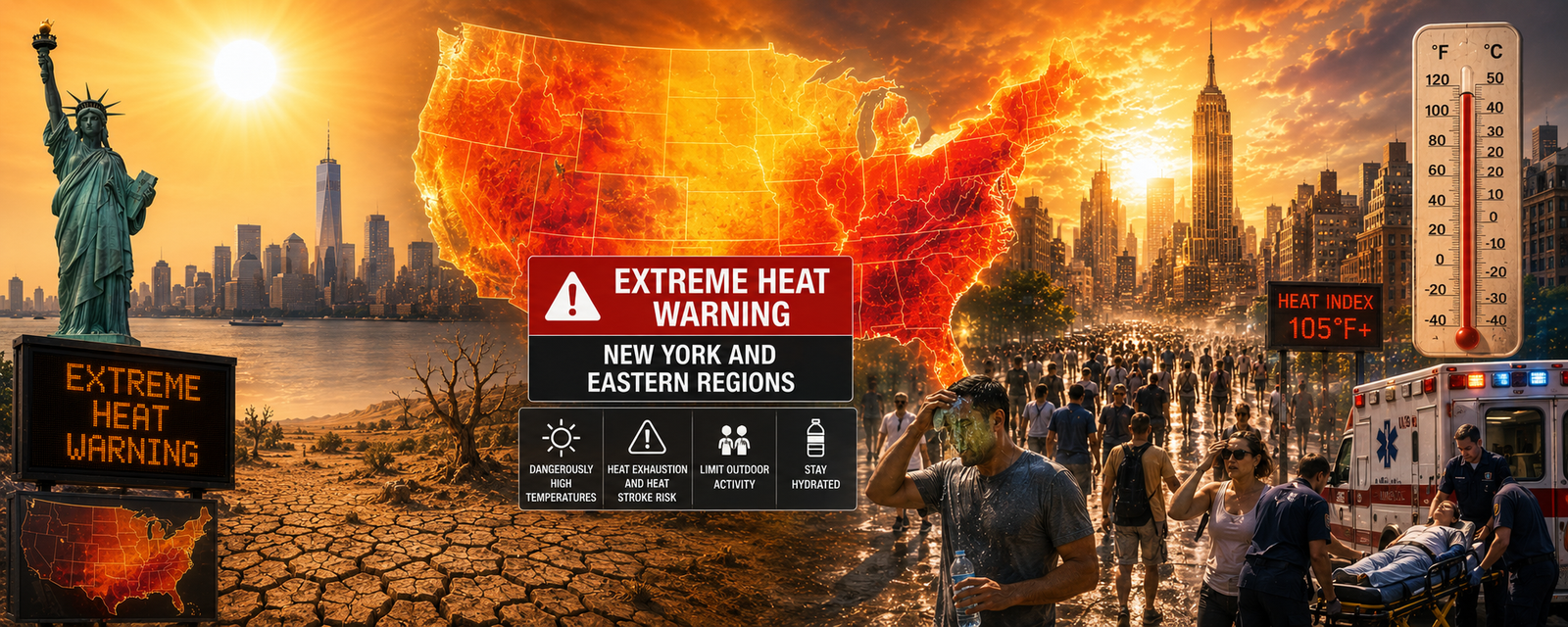
A prolonged and dangerous heat wave is sweeping across the United States, severely impacting daily life. Stretching from the Midwest to the East Coast, more than two dozen states are currently under extreme heat conditions. Weather officials have warned that the situation is expected to persist through the July 4 Independence Day holiday and may intensify further in several regions.
New York City and its surrounding areas are already under an “Extreme Heat Warning.” Meteorologists report that high humidity levels are making temperatures feel significantly hotter than the actual readings. The heat index in some areas is expected to range between 105°F and 115°F, posing serious risks to public health.
Dangerous Temperature Forecast in Major Cities
According to weather forecasts, conditions are worsening across several major cities:
* New York City: Feels-like temperature could reach around 110°F
* Philadelphia and Washington, D.C.: Up to 111°F
* Boston: Around 106°F
* Chicago: Approximately 102°F
Experts explain that excessive humidity is preventing sweat from evaporating efficiently, making it harder for the body to cool itself—thereby increasing the danger of heat-related illnesses.
No Relief at Night, Health Risks Rising
Meteorologists have also raised concerns about the lack of nighttime relief. Temperatures are not dropping significantly after sunset, preventing the body from recovering from daytime heat exposure. This condition, known as “minimal overnight relief,” adds further stress to the human body.
Health experts warn that prolonged exposure to such conditions can significantly increase the risk of:
* Dehydration
* Heat exhaustion
* Heat stroke
Children, the elderly, and individuals with chronic illnesses are particularly vulnerable.
Emergency Measures in New York City
To combat the extreme heat, New York City has activated its Heat Emergency Plan. Hundreds of cooling centers have been opened across the city, offering residents access to air-conditioned spaces free of charge.
Authorities have issued several public safety guidelines:
* Avoid unnecessary outdoor activities
* Stay hydrated by drinking plenty of water
* Remain in air-conditioned environments whenever possible
* Check on elderly neighbors and family members
* Never leave children or pets inside parked vehicles
Emergency services are also on high alert to respond quickly to heat-related health incidents.
Public Health Warning
Public health officials emphasize that extreme heat is not just uncomfortable—it can be deadly. Thousands of deaths in the United States each year are directly or indirectly linked to heat-related conditions.
Experts stress the importance of recognizing early warning signs, including:
* Dizziness
* Excessive sweating or lack of sweating
* Nausea
* Weakness or fainting
Immediate medical attention is strongly advised if these symptoms occur.
Signs of Climate Change
Meteorologists suggest that the increasing frequency and intensity of such heat waves may be linked to global climate change. This growing trend of prolonged extreme heat could pose a significant public health challenge in the future.
Conclusion
The ongoing heat wave across the United States is expected to expand and intensify in the coming days. Authorities are urging residents to take necessary precautions, stay hydrated, and avoid unnecessary exposure to extreme heat.