

Cost of living, taxes and utility bills take center stage ahead of November 3 election
Sadia J. Choudhury:
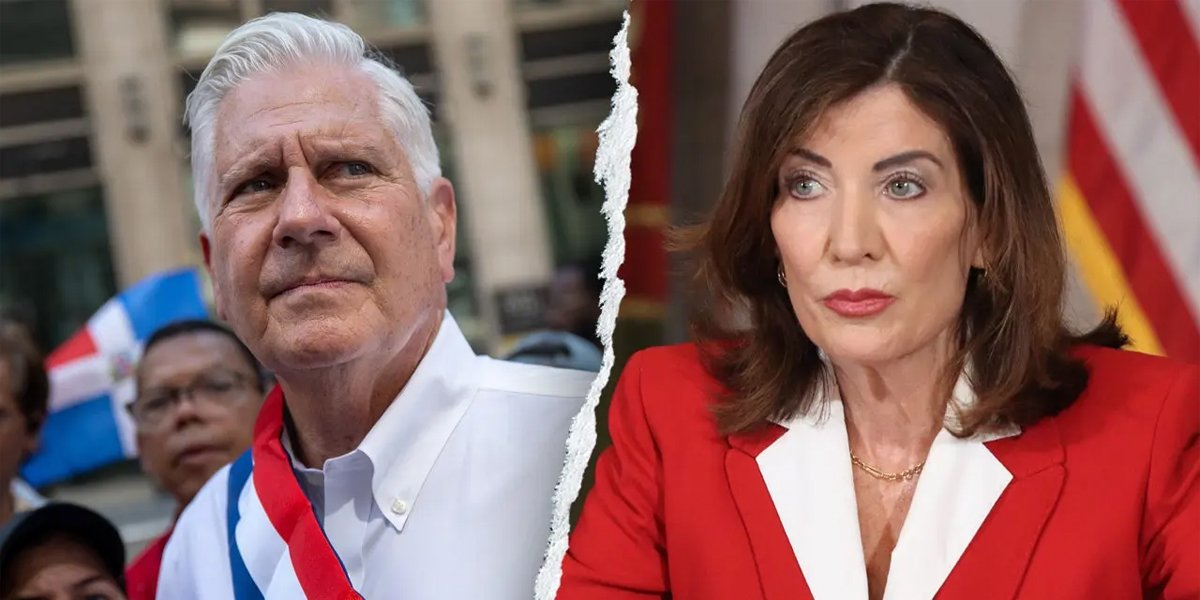
— New York Gov. Kathy Hochul and Republican challenger Bruce Blakeman are set to face off Tuesday evening in the only scheduled televised debate of the state’s 2026 gubernatorial election, with just three weeks remaining before Election Day.
The one-hour debate is scheduled to begin at 7 p.m. Eastern and will be broadcast on NY1 and Spectrum News channels. Political journalists Errol Louis and Susan Arbetter are expected to moderate the discussion.
The debate offers both candidates a major opportunity to present their policies and challenge their opponent’s record as voters prepare to choose New York’s next governor on November 3.
Hochul, a Democrat seeking re-election, is defending her administration’s record and highlighting initiatives aimed at easing household expenses. Blakeman, the Republican Nassau County executive, is campaigning on promises to reduce taxes and lower utility costs.
Poll Shows Hochul Leading Blakeman
A Marist University poll released October 7 found Hochul leading Blakeman by 53% to 42% among registered voters, an 11-percentage-point margin. Five percent of respondents said they remained undecided.
The survey was conducted October 1–4 among 1,361 registered voters, with a margin of error of plus or minus 3.6 percentage points.
The poll also revealed regional differences in voter support. Hochul received 69% support among New York City voters, while Blakeman led with 51% in Upstate New York.
Although the survey gives Hochul an advantage in the measured preferences of registered voters, polling does not determine the final outcome. Voter turnout, late campaign developments and the ability of each campaign to mobilize supporters could influence the November result.
Cost of Living Emerges as a Central Issue
The rising cost of living remains a major concern for New Yorkers facing expenses related to housing, groceries, electricity and other necessities.
Blakeman has pledged to reduce income taxes and utility costs, arguing that changes in state policy are needed to ease the financial burden on households and businesses.
Hochul, meanwhile, is emphasizing her administration’s efforts to expand child-care assistance and provide financial relief to residents facing energy costs. Her campaign is presenting these initiatives as part of a broader effort to make life more affordable for New York families.
Tuesday’s debate is expected to provide voters with an opportunity to examine the candidates’ approaches to affordability, including how their proposals would be implemented and how the state would pay for them.
The contrast between Blakeman’s proposed reductions and Hochul’s existing assistance programs could become a central point of discussion as both candidates seek to demonstrate how their policies would affect household budgets.
Trump’s Influence Adds a National Political Dimension
National politics has also become a significant feature of the gubernatorial campaign.
Hochul’s campaign has highlighted Blakeman’s political relationship with President Donald Trump and criticized his position on the administration’s tariff policies. Blakeman, in turn, has sought to draw attention to Hochul’s political alliances with progressive leaders, including New York City Mayor Zohran Mamdani and U.S. Rep. Alexandria Ocasio-Cortez.
Hochul has appeared alongside Ocasio-Cortez to discuss a proposed one-year moratorium on new data-center construction. Blakeman has also appeared with Trump at a campaign rally in an effort to energize Republican supporters.
The candidates’ competing political alliances reflect a broader debate over the direction of New York state government and the influence of national political divisions on state-level elections.
A Marist poll found that 38% of registered New York voters approved of Trump’s job performance, while 60% disapproved. The figures provide context for the political environment in which both gubernatorial candidates are campaigning, though they do not independently establish how Trump’s standing will affect the governor’s race.
Final Campaign Stretch Begins
Hochul defeated Republican challenger Lee Zeldin by approximately 5.5 percentage points in the 2022 gubernatorial election. She is now seeking another term, while Blakeman is attempting to build support for a Republican return to the governor’s office.
For Blakeman, the debate provides a high-profile opportunity to challenge the incumbent’s record and explain how his proposed policies would address the state’s economic concerns. Hochul, meanwhile, has an opportunity to defend her administration’s actions and make her case for another term.
Early voting is scheduled to begin October 24 and continue for 10 days ahead of Election Day.
With the campaign entering its final weeks, voters will be watching for specific proposals on taxes, energy costs, child care and economic policy. The debate may help clarify the differences between the candidates, particularly for voters who remain undecided or want more detail about how the proposals would work in practice.
Ultimately, New York voters will decide which candidate they believe offers the more convincing plan for the state’s future when they cast their ballots on November 3.