


Washington — A federal appeals court on Monday night denied a bid from former President Joe Biden to keep the Justice Department from giving a conservative think tank redacted transcripts and audio recordings of conversations he had with his biographer roughly a decade ago, but stayed the opinion until Aug. 3 to allow time for further appeals.
In a 2-1 decision, a three-judge panel of the U.S. Court of Appeals for the District of Columbia Circuit rejected Biden’s attempt to stop the Heritage Foundation from getting the material.
Judges Sri Srinivasan and Gregory Katsas said in an unsigned opinion, “We conclude that Biden has not shown a likelihood that the requested materials must be withheld from disclosure.” Judge Florence Pan dissented.
“We conclude that any remaining incursion on personal privacy from disclosure of the now-redacted materials likely does not outweigh the public interest in disclosure,” Srinivasan and Katsas found. “In that regard, although there is generally a substantial privacy interest in not being identified as the target of an investigation that results in no charges, … DOJ announced the Special Counsel’s appointment and the purpose of his investigation, and the Special Counsel Report describes at length that Biden was investigated for allegedly retaining and disclosing classified materials.”
They wrote that “because the requested materials would bear on understanding and assessing the Special Counsel’s investigation and his ultimate decision, disclosure of the materials ‘is likely to advance’ the public interest at stake.”
Pan wrote in dissent that the D.C. Circuit’s decision “will result in the premature release of Biden’s concededly private conversations.” The court, she said, “effectively rules in favor of immediate disclosure of the disputed conversations.”
“In my view, Biden has shown a substantial privacy interest,” Pan wrote. “The conversations at issue took place in Biden’s home, and the recordings of them were obtained by the government in the course of a criminal investigation that did not lead to an indictment.”
On July 10, the three-judge panel agreed to issue an administrative injunction stopping the release of the material to the organization for 10 days.
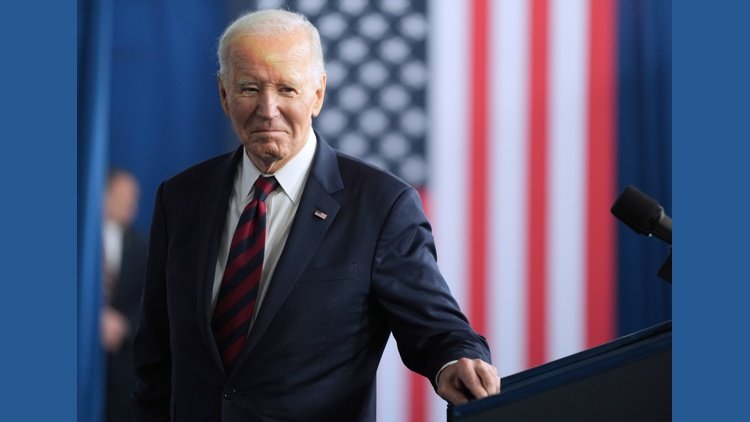
Appeals Court Denies Biden Bid to Block Release of Tapes With Biographer for Now