

Shah J. Choudhury
When a journalist who stands for truth becomes a victim of his own profession, the question is no longer merely personal. It is a question about the deeper failures of journalism itself.
Journalists report on injustice, corruption, discrimination and the rights of others every day. They question the powerful and give voice to those who are often unheard. Yet when journalists themselves raise questions about salaries, job security, professional dignity and the mental pressures of the profession, the media often becomes strangely silent.
Is this not one of journalism’s greatest contradictions?
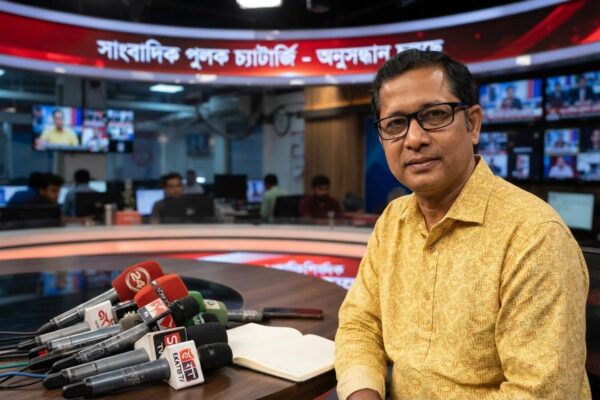
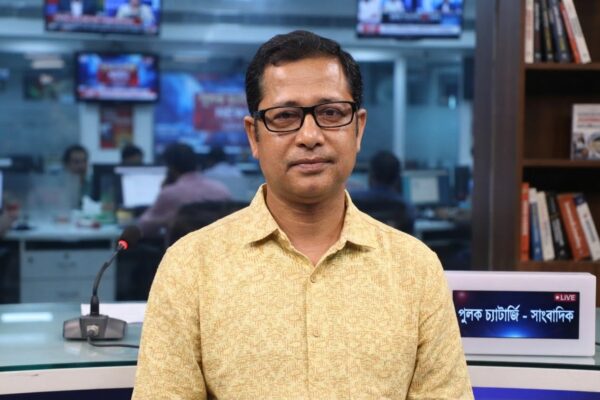
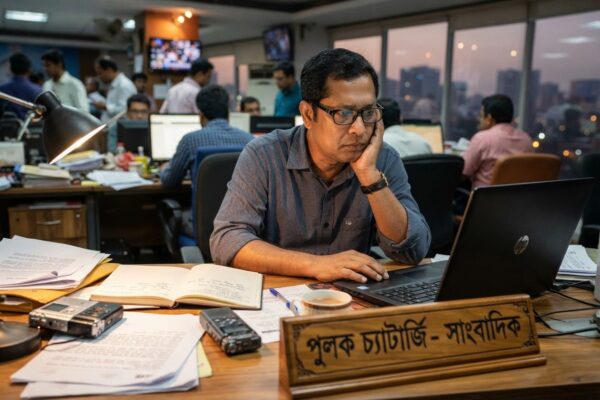
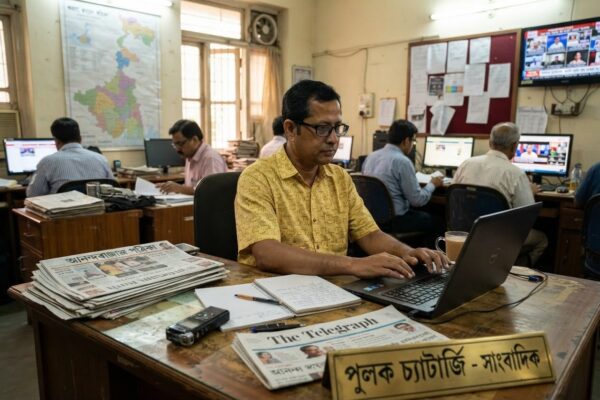
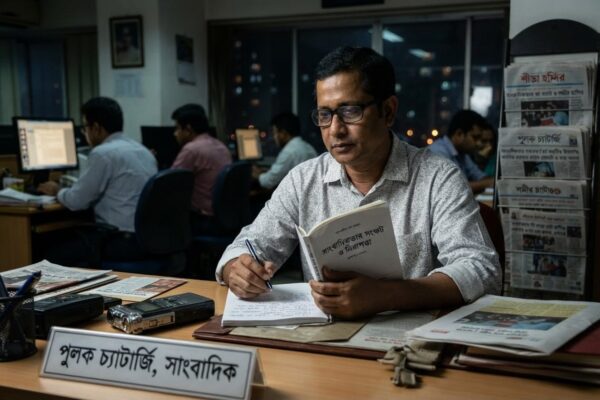
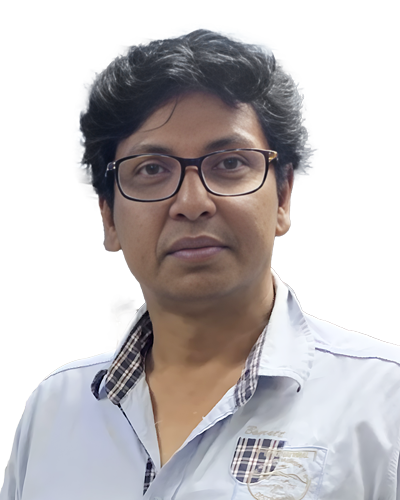
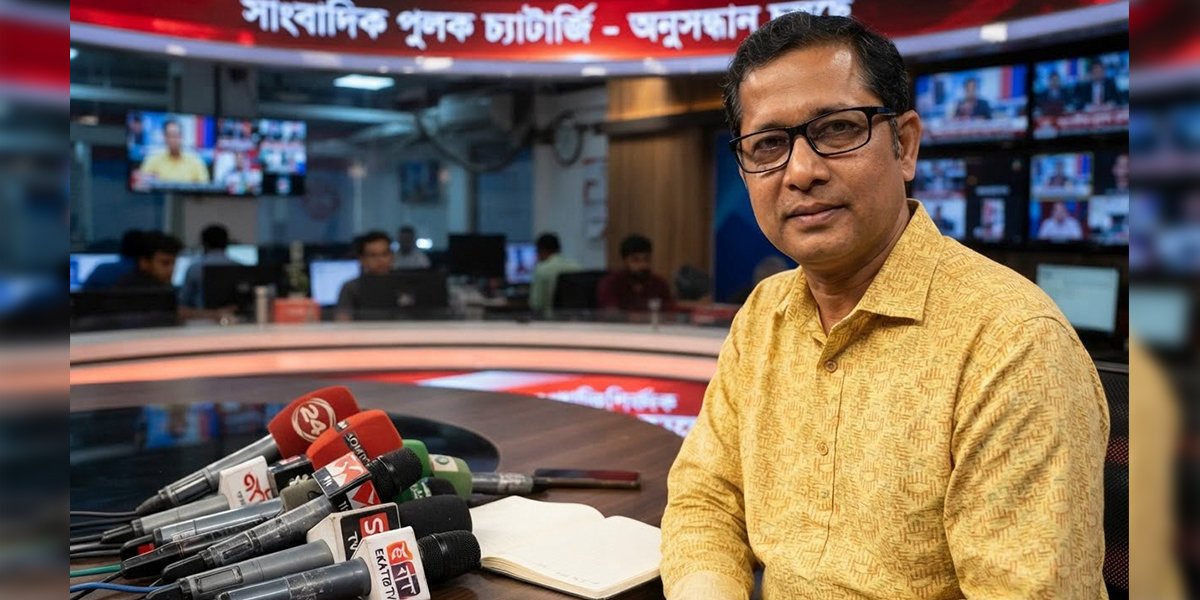
The case of Pulok Chatterjee is therefore not simply the story of one journalist. It forces us to confront a much larger question: Who stands beside those who spend their lives standing up for the truth?
About a year ago, the passing of veteran journalist Bibhuranjan Sarkar raised a similar concern. After five decades in journalism, he spoke openly about the financial insecurity and professional uncertainty that had become part of his life. A profession he had embraced as both a career and a calling had, by the later years of his life, left him wondering whether there was still a place for him in it.
His words were painfully simple: “It is not easy to survive by writing the truth.”
Those words should not be dismissed as one man’s personal frustration. They reflect a deeper crisis within the profession.
The questions surrounding Pulok Chatterjee compel us to ask: Why must a journalist who spends a lifetime fighting for truth eventually find himself fighting for his own dignity, security and survival?
We expect journalists to be fearless. But do we give them a life secure enough to remain fearless?
We demand investigative reporting, professional integrity and the courage to challenge those in power. Yet how long can we expect journalists to carry that burden while facing inadequate compensation, job insecurity, institutional pressure and immense emotional stress?
A strong media cannot be built on such contradictions.
Press freedom is not merely the freedom to publish a story. It also requires fair compensation, workplace dignity, professional security, mental well-being and institutional accountability for the people who produce that journalism.
That is why the Pulok Chatterjee case should not end with condolences. It should compel us to ask uncomfortable questions.
What kind of professional environment allows those who defend the rights of others to become so vulnerable when they need protection themselves?
If we fail to confront these questions today, there may be many more Pulok Chatterjees tomorrow—journalists who dedicate their lives to the truth, only to discover that they have been left alone when they needed the profession to stand with them.
Pulok Chatterjee’s story, therefore, is not simply about the defeat of one man.
It is a mirror held up to our journalism, our institutions and our collective conscience.
The question is no longer whether we will look into that mirror.
The question is whether we will have the courage to face what we see.
Author: Journalist & Editor-Publisher
Photos