An amateur historian has stumbled upon a provocative clue to the enduring mystery of what became of a notorious pirate who raided a royal Indian treasure ship centuries ago, implicating a co-conspirator whose name is familiar to many New Yorkers. James Bailey, who five years ago made headlines after unearthing ancient coins believed to be linked to English pirate Capt. Henry Every, now says that colonial-era documents suggest the “King of the Pirates” and his violent crew got an assist from Thomas Jones, the namesake of Jones Beach, New York’s most visited state park after Niagara Falls.
“You have millions of visitors and generations of New Yorkers going to this beach,” Bailey said. “Nobody knew that he was actually a major player in arguably the biggest heist in the history of piracy.”
Since his big find, Bailey has pored through documents to dig even deeper into the bloody 1695 raid of the Ganj-i-Sawai on the Red Sea and the mystery of what happened to Every.
The pirate crew is said to have tortured, killed and raped those aboard the royal ship, sparking global outrage and what is considered the first worldwide manhunt. Some were caught and executed, but many others, including Every, were never heard from again and are believed to have scattered to Europe and the American colonies.
Documents, including depositions from Every’s associates, suggest Jones was recruited to serve as a “wheelman,” helping the pirates evade authorities after they made off with tens of millions of dollars’ worth of gold and silver, according to Bailey.
Other documents show that New York’s governor, charged by the British crown to crack down on piracy, investigated Jones years later after he’d remade himself as the wealthy proprietor of a whaling operation on the barrier beach on Long Island that now bears his name.
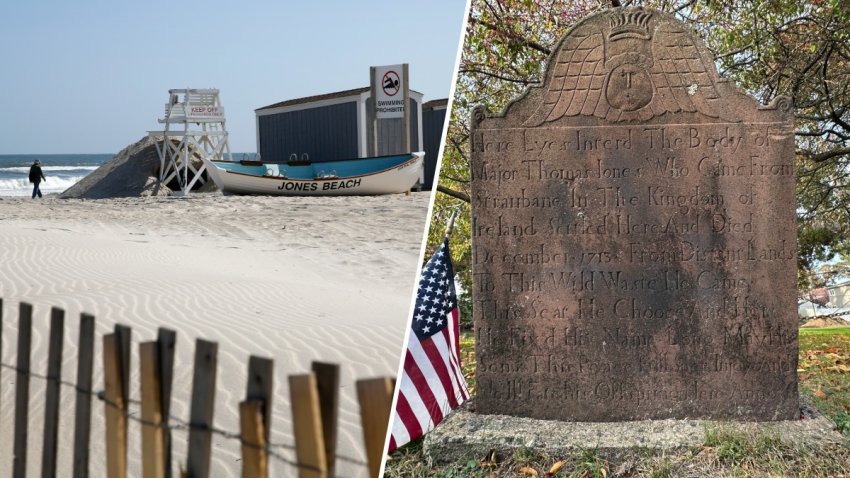
Namesake Of NY Beach May Have Helped Murderous Pirate’s Heist, Amateur Historian Finds