


DHS Cites Privacy Concerns as Government Watchdog Calls for Stronger Accountability Measures
Salman J. Choudhury:
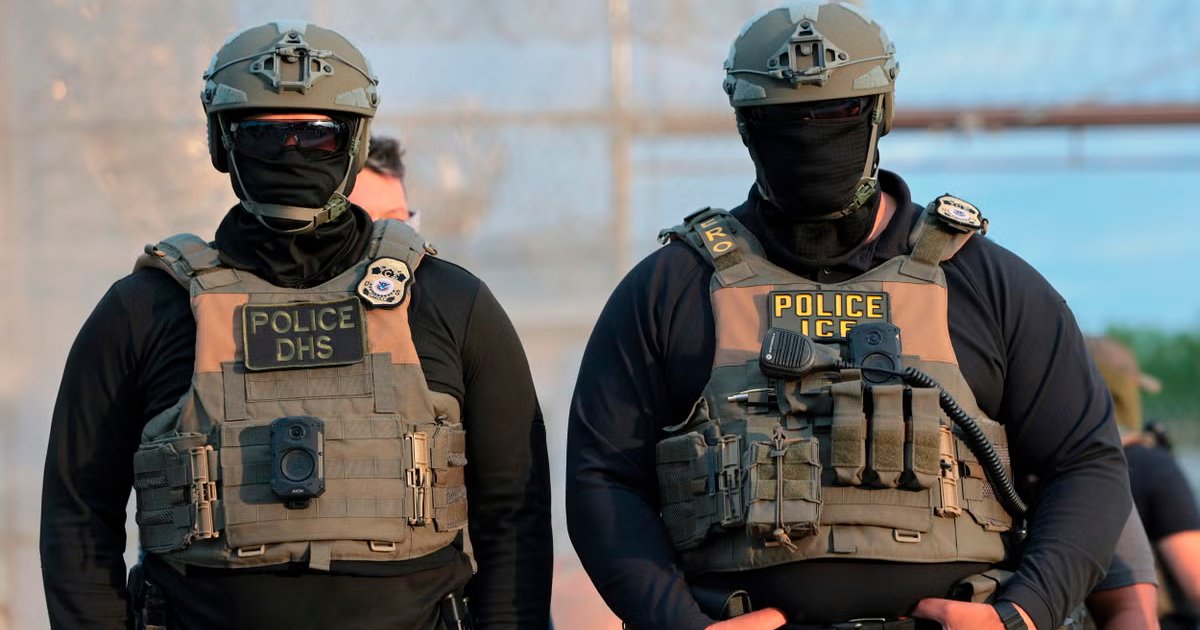
— U.S. Immigration and Customs Enforcement (ICE) has rejected a recommendation to automatically activate officers’ body-worn cameras when they draw their firearms or activate emergency vehicle sirens, raising renewed questions about transparency and accountability in federal immigration enforcement.
The Department of Homeland Security (DHS), which oversees ICE and U.S. Customs and Border Protection (CBP), cited privacy concerns and potential operational risks in opposing the recommendation, according to reporting by The Hill.
The Government Accountability Office (GAO), the federal government’s independent oversight agency, identified weaknesses in body-camera policies and implementation at ICE and CBP. Its recommendations were aimed at ensuring that cameras are activated consistently during law enforcement encounters, particularly when incidents involve potential uses of force.
Privacy Concerns Behind DHS Decision
DHS argued that automatic activation could inadvertently record sensitive information involving confidential sources, crime victims and members of the public in situations where recording may be restricted.
The department also raised concerns that automatic triggers could capture private or constitutionally protected activities unrelated to law enforcement operations.
According to the report, DHS agreed with six of the GAO’s seven recommendations but declined to adopt the proposed automatic-activation measure.
The disagreement highlights a continuing challenge for federal agencies: balancing privacy protections with the need to preserve reliable video evidence during potentially dangerous encounters.
Watchdog Identifies Policy Gaps
The GAO found that ICE and CBP personnel faced uncertainty about when body-worn cameras were required to be activated.
Some officers reportedly expressed confusion about camera requirements during vehicle searches, the transportation of detained individuals and other enforcement activities.
The watchdog also identified shortcomings in training, oversight and enforcement of existing camera policies. In one ICE office, camera use reportedly had not begun despite training because personnel remained uncertain about the applicable requirements.
The report further noted that, from the launch of ICE’s body-camera program through September 2025, the agency had issued no written reprimands for violations of its body-camera policy.
These findings raised concerns about whether existing rules were being consistently followed and whether violations were subject to meaningful disciplinary action.
Use-of-Force Incidents Intensify Scrutiny
Federal immigration enforcement has faced growing public scrutiny over arrests, the use of force and shootings involving immigration officers.
In incidents where officers’ body cameras were not activated, the absence of footage has complicated efforts to establish precisely what happened. Critics argue that video recordings can help investigators independently assess encounters, compare accounts from witnesses and officers, and determine whether enforcement actions complied with policy.
DHS, however, maintains that camera systems must account for privacy protections and sensitive information.
The department has said body cameras have been acquired for ICE officers and that training is underway. However, providing officers with cameras does not necessarily ensure that the devices will be activated during every relevant encounter.
Transparency and Accountability Remain Central Issues
The GAO findings come amid broader debate over federal immigration enforcement, civil liberties and government oversight.
Automatic activation could help preserve video evidence during critical incidents, while DHS’s objections underscore concerns about unintended recording and privacy. The dispute leaves questions about how federal agencies will ensure consistent camera use without compromising protected information.
The watchdog’s findings also emphasize the importance of clear policies, effective training, routine monitoring and meaningful consequences when officers fail to comply with camera requirements.
The central question remains whether federal immigration authorities can strengthen transparency and accountability while addressing legitimate privacy concerns.