


Thousands of Migrant Children Face Deportation Proceedings Without Lawyers, Raising Serious Human Rights and Due Process Concerns
Sadia J. Choudhury : A troubling reality is unfolding inside U.S. immigration courts, where thousands of migrant children are appearing before immigration judges without legal representation as they fight deportation. Forced to navigate one of the nation’s most complex legal systems on their own, many children must answer judges’ questions, explain why they fled their home countries, and argue for protection without the guidance of an attorney.
According to recent reporting, reductions in legal assistance programs and policy changes have left many unaccompanied and vulnerable children without access to legal counsel. Immigration advocates warn that these children—many of whom escaped violence, persecution, abuse, gang activity, or severe poverty—are now expected to defend themselves in proceedings that can determine whether they remain in the United States or are returned to dangerous conditions.
Legal experts say the immigration system is highly complex even for trained attorneys, making it nearly impossible for a child to understand court procedures, legal terminology, and the evidence required to support an asylum or other humanitarian protection claim. Without professional representation, many children may be unable to present their cases effectively or fully understand their legal rights.
Child welfare organizations and immigrant rights groups argue that access to legal counsel is not merely a legal advantage—it is a fundamental safeguard for due process. Studies have consistently shown that children represented by attorneys are significantly more likely to obtain legal protection than those who appear alone.
Advocates warn that the growing number of unrepresented children reflects broader challenges facing the U.S. immigration system, including mounting case backlogs, limited resources, and shifting immigration policies. They argue that placing children alone in courtroom proceedings raises profound questions about fairness, justice, and America’s commitment to protecting vulnerable populations.
Human rights organizations are urging federal authorities and lawmakers to restore and expand legal assistance programs for migrant children, emphasizing that no child should be forced to face life-changing immigration proceedings without legal representation.
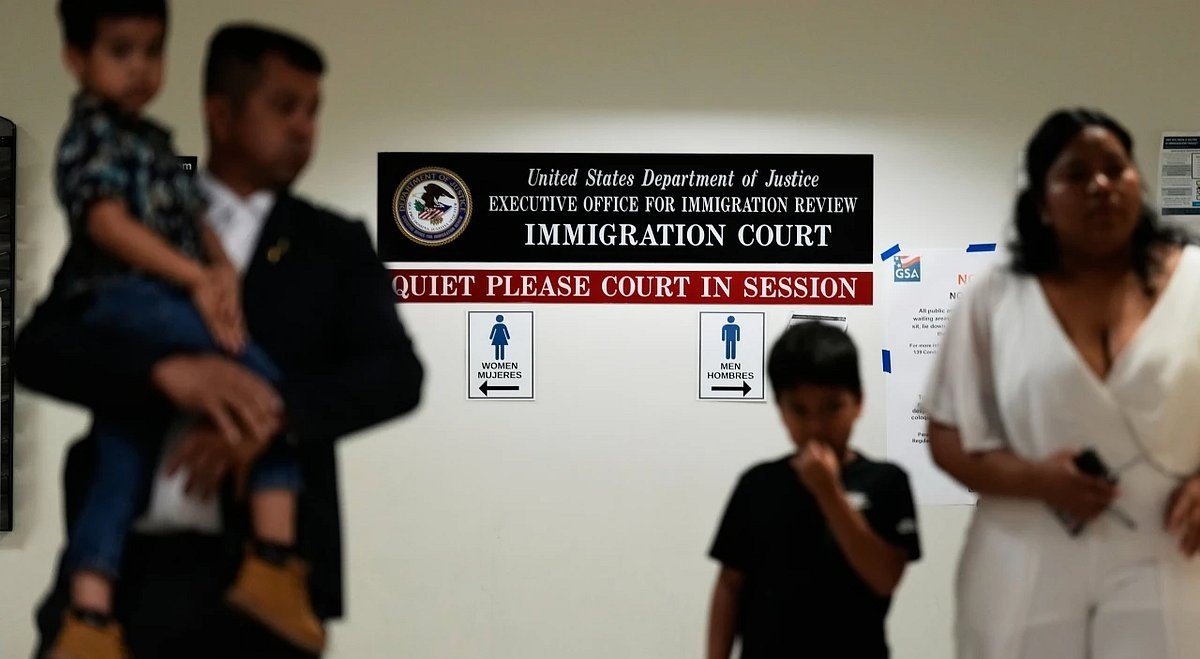
As immigration remains one of the nation’s most contentious issues, the image of a child standing alone before an immigration judge has become a powerful symbol of the ongoing debate over justice, compassion, and the rule of law in the United States.