Economic Discontent Delivers Major Midterm Setback for Republicans, AP voter survey reveals widespread frustration over rising living costs, healthcare expenses and economic inequality. Nearly two-thirds blame Trump’s policies for inflation, while concerns grow over AI, jobs and an economy increasingly seen as favoring the wealthy.
Sadia J. Choudhury:
— Economic dissatisfaction emerged as a defining force in the 2026 midterm elections, delivering a significant political setback to President Donald Trump and the Republican Party. Rising living costs, persistent inflation, healthcare expenses, economic inequality and concerns about the future of employment have intensified voter frustration with the administration’s economic agenda.
A major Associated Press voter survey, conducted across the country with more than 100,000 voters, highlights the growing disconnect between the administration’s economic promises and the financial realities experienced by millions of American households.
The findings suggest that economic concerns played a central role in shaping voter decisions, contributing to Democratic gains in congressional and gubernatorial races.
VOTERS HOLD TRUMP POLICIES RESPONSIBLE FOR INFLATION
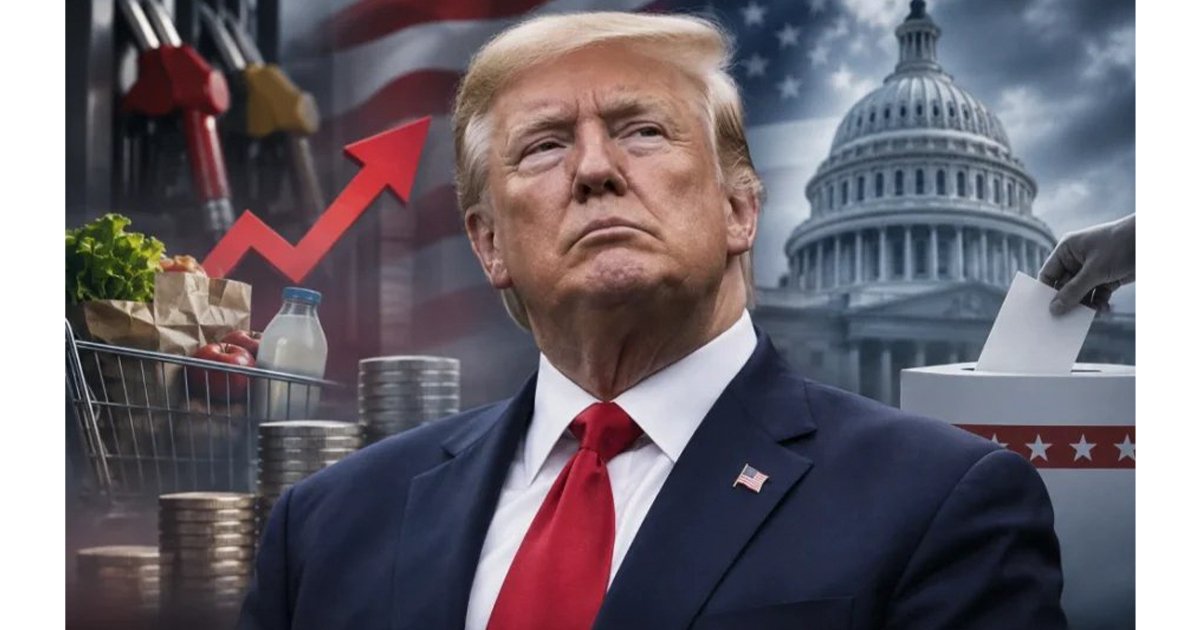
One of the survey’s most significant findings is that nearly two-thirds of voters believe Trump’s policies have contributed to rising inflation.
Although the administration has frequently pointed to previous economic conditions under former President Joe Biden, many voters appear unconvinced by that explanation.
According to the AP report, consumer prices increased by 3.7% over the 12 months ending in the survey period, compared with 3% when Trump began his second presidential term.
The administration’s aggressive tariff policies have also become a source of public concern. Many voters believe tariffs on imported goods have placed additional pressure on businesses and consumers rather than delivering the economic benefits promised by the White House.
The rising cost of imported products, combined with uncertainty in global markets, has added to concerns about household budgets.
COST OF LIVING BECOMES A DECISIVE ELECTION ISSUE
For American families, the economy is increasingly measured not by Wall Street performance but by the cost of groceries, rent, electricity, transportation and healthcare.
Nearly 90% of voters surveyed said the cost of living was an important factor in their congressional voting decisions.
Among those voters, approximately 60% supported Democratic candidates in their local House races.
The findings suggest that household financial pressure became a powerful political issue, particularly among middle- and lower-income families.
Higher gasoline prices, housing expenses and everyday necessities have made it increasingly difficult for many Americans to maintain their previous standard of living.
The economic impact of the conflict involving Iran has also contributed to concerns over energy prices and household expenses.
ECONOMIC SYSTEM SEEN AS FAVORING THE WEALTHY
The AP survey reveals another significant source of public frustration: economic inequality.
Approximately 70% of voters believe the American economic system favors wealthy individuals over ordinary citizens. Only about 30% view the economy as fair to most Americans.
The growing influence of billionaires and major technology executives in the political and economic landscape has intensified public debate over wealth concentration.
Even among higher-income households, concerns remain about whether economic opportunities and financial benefits are being distributed fairly.
The findings suggest that economic inequality is no longer viewed exclusively as an issue affecting low-income families. It has become a broader concern across different income groups.
ARTIFICIAL INTELLIGENCE RAISES CONCERNS ABOUT JOB SECURITY
Artificial intelligence is rapidly transforming the American economy, attracting billions of dollars in investment and creating new opportunities across industries.
However, its expansion is also generating uncertainty among workers.
Approximately 60% of surveyed voters believe artificial intelligence is more likely to have a negative than a positive impact on society.
Concerns include potential job displacement, workplace automation and the possibility that companies will increasingly replace traditional jobs with AI-powered systems.
While technology companies continue to promote AI as a major driver of future economic growth, many Americans remain uncertain about how its benefits will reach ordinary workers.
HEALTHCARE COSTS REMAIN A MAJOR BURDEN
Healthcare affordability is another major issue highlighted by the survey.
Medical bills, prescription drug prices, insurance premiums and hospital expenses continue to place significant financial pressure on American households.
Approximately 60% of voters want the government to take a more active role in controlling healthcare costs.
Many voters believe the administration’s policies have not adequately addressed the affordability challenges facing patients and families.
The findings underscore the growing demand for more accessible and affordable healthcare, particularly among working-class and lower-income Americans.
LOWER-INCOME HOUSEHOLDS FEEL THE GREATEST PRESSURE
The survey also reveals a significant gap in how Americans experience the economy.
Approximately 60% of voters from households earning less than $50,000 annually said their financial situation was worse than it had been two years earlier.
By contrast, higher-income households reported comparatively stronger financial conditions, although concerns about democracy, government accountability and corruption remained prominent.
The contrast highlights the uneven impact of economic conditions across American society.
DEMOCRACY, CORRUPTION AND PRESIDENTIAL POWER
Beyond economic concerns, voters also expressed dissatisfaction with the state of American democracy and government accountability.
More than half of those surveyed identified government corruption as an important factor in their voting decisions.
Approximately 70% said Congress was not doing enough to provide effective oversight and checks on presidential power.
Around 60% also expressed concern that Trump’s priorities were not aligned with their own.
These findings indicate that the election was shaped not only by financial concerns but also by broader questions about political leadership, institutional accountability and the direction of American democracy.
A POLITICAL WARNING FOR THE WHITE HOUSE
The 2026 midterm results represent a significant warning for the Trump administration.
The findings suggest that voters are increasingly judging political leadership by its impact on their everyday lives rather than by campaign promises or broad economic indicators.
For Democrats, their electoral gains create an opportunity to demonstrate that they can deliver meaningful improvements in affordability, healthcare, employment and economic security.
For Republicans, the results raise difficult questions about whether the administration’s economic agenda is addressing the priorities of ordinary Americans.
The next Congress will face mounting pressure to tackle inflation, reduce healthcare costs, protect employment opportunities and strengthen economic security for American families.
Ultimately, the message from the 2026 midterm elections is clear: Economic success cannot be measured solely by stock market performance, corporate profits or national growth figures. For millions of Americans, the real measure of prosperity is whether they can afford their homes, pay their bills, access healthcare and build a financially secure future.