

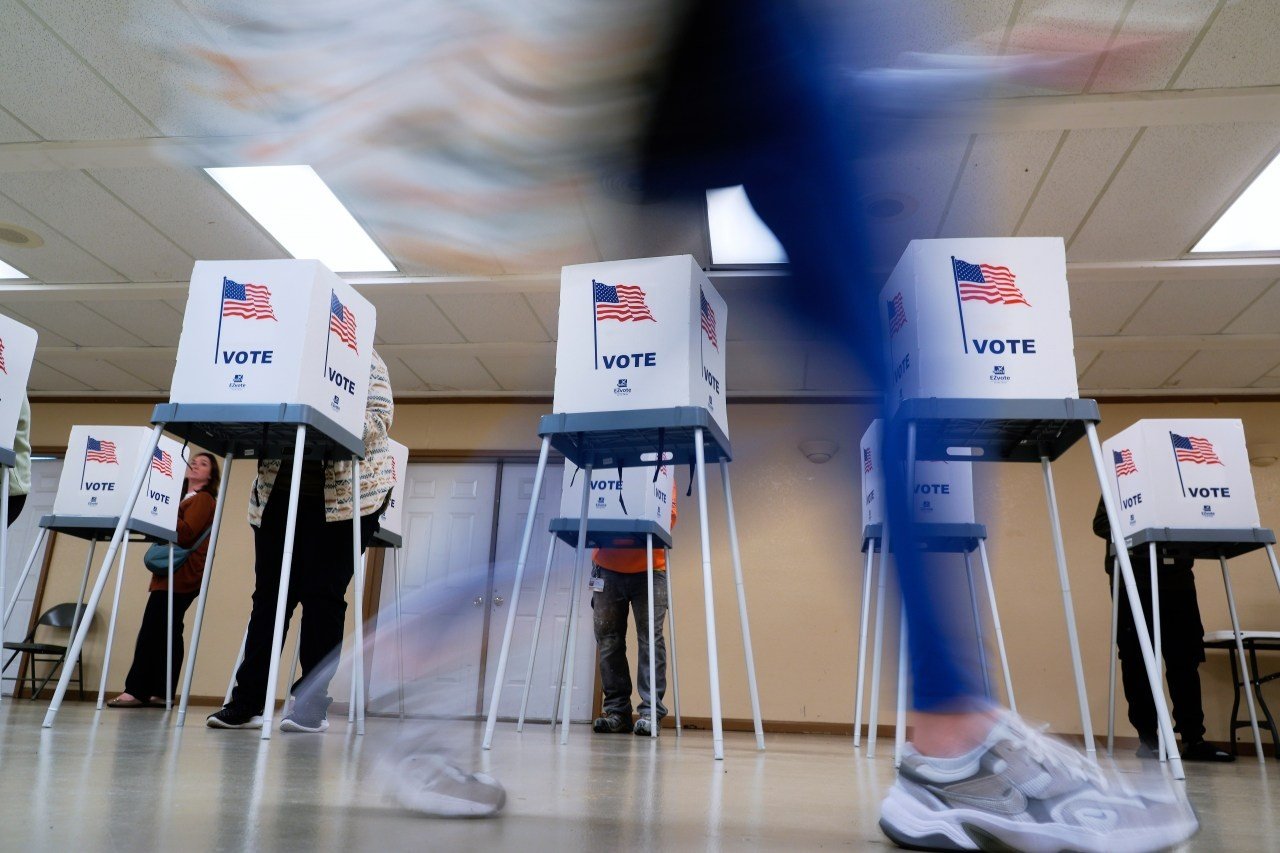
New York officials and advocates are reacting to a U.S. Supreme Court 6-3 decision on Wednesday that weakens a key provision of the Voting Rights Act.
The ruling, in a case involving a Black‑majority congressional district in Louisiana, affects Section 2 of the 1965 law, which has long been used to challenge racial discrimination in voting and was central to expanding ballot access for Black Americans and Latinos.
New York Attorney General Letitia James criticized the decision, saying in a statement that the Voting Rights Act “was born from the blood shed on the Edmund Pettus Bridge” and that the ruling “dishonors that legacy by weakening one of our nation’s most powerful civil rights laws.” She said her office will continue working to protect voting rights in New York.
“The Supreme Court just turned its back on one of the most sacred promises in American democracy—the promise that every voice counts,” Sen. Chuck Schumer said in part.
Amanda Litman, president and co‑founder of Run for Something, said the decision underscores the importance of state‑level elections and warned that the ruling could make it harder to challenge discriminatory voting practices.
Rev. Al Sharpton, Founder and President of the National Action Network (NAN), issued the following statement:
“Today’s decision is a bullet in the heart of the voting rights movement,” Sharpton said. “The Supreme Court has not just weakened a law, it has humiliated and dismantled the life’s work of Dr. Martin Luther King Jr., John Lewis, and every man and woman who marched, bled, and died for Black Americans to have an equal voice at the ballot box.”
Sen. Kirsten Gillibrand called it a “tragic day in the nation’s history,” saying, “Make no mistake: this decision will disenfranchise voters and dilute minority communities.”
Could the Supreme Court Voting Rights decision affect New York voters?
While the full impact on Section 2 remains unclear, the ruling could influence redistricting battles nationwide and could lead Republican‑led states to eliminate Black and Latino districts that tend to favor Democrats, potentially shifting the balance of power in Congress.
As of early 2025, seven of New York’s 26 congressional districts are represented by Republicans, according to the New York State GIS Clearinghouse.