Hochul announces six-month grace period as new federal work requirements raise concerns over healthcare access
By Sadia J. Choudhury | New York
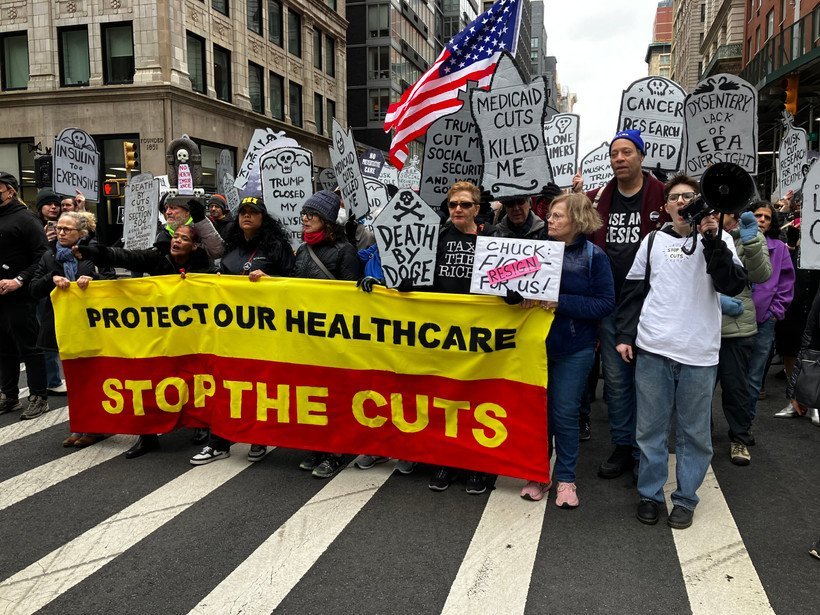
Nearly 2 million New Yorkers could be at risk of losing their Medicaid coverage under new federal work-related requirements. In response, Governor Kathy Hochul has announced a six-month grace period aimed at protecting eligible residents from losing their health insurance solely because they fail to meet the new requirements.
On Thursday, November 19, Hochul announced that New York would take advantage of the federal government’s six-month “Hold Harmless” period. Under the arrangement, eligible Medicaid recipients will not lose coverage solely for failing to meet the new community engagement requirements between January 1 and June 30, 2027.
The new requirements stem from H.R. 1, the federal legislation enacted in 2025. Under the law, certain Medicaid recipients between the ages of 19 and 64 will generally be required to complete at least 80 hours per month of qualifying work, community service, education, or other approved activities.
Certain individuals, including people with qualifying medical conditions, pregnant women, and caregivers of dependent children, may be exempt from these requirements.
According to state estimates, approximately 2 million New Yorkers could be at risk of losing Medicaid coverage under the new federal rules. In New York City alone, nearly 900,000 Medicaid recipients could potentially be affected.
$213 Million Investment in Healthcare Enrollment Assistance
Alongside the temporary protection, New York is investing $213 million over five years to help residents enroll in and maintain health insurance coverage.
Through the state’s Navigator Program, community-based organizations will provide free assistance with applications, renewals, eligibility questions, and required documentation.
The first phase includes $32 million annually for 49 community-based organizations and 22 partner agencies. A second phase, planned for early 2027, is expected to provide an additional $10.6 million annually, bringing the total annual investment to $42.6 million.
Seeking Special Exemption for Bronx Residents
New York is also seeking a federal exemption from the new work requirements for eligible Bronx residents because of the borough’s high unemployment rate.
The state plans to submit a formal request to the Centers for Medicare and Medicaid Services (CMS). Federal law allows certain geographic areas with high unemployment to qualify for temporary exemptions. The request, however, remains subject to federal approval.
Governor Hochul said the new federal restrictions could create significant challenges for families, older adults, and vulnerable communities. She emphasized that New York would take steps to ensure eligible residents do not lose access to healthcare because of administrative barriers or paperwork complications.
State Health Commissioner Dr. James McDonald also stressed the importance of Medicaid in providing essential healthcare to millions of New Yorkers. He said the state is working to ensure recipients receive the information and assistance they need as the federal policy changes take effect.
Important Advice for Medicaid Recipients
State officials are urging Medicaid recipients to keep their personal information—including mailing addresses, phone numbers, and email addresses—up to date. Residents should also regularly review notices and correspondence from NY State of Health to avoid missing important deadlines or eligibility information.
Residents can access enrollment and renewal assistance through the NY State of Health website at nystateofhealth.ny.gov or by calling 1-855-355-5777.
Medicaid remains a critical source of healthcare coverage for millions of low-income families, older adults, and vulnerable residents across New York. The state’s latest initiative is intended to give eligible recipients additional protection and help prevent unnecessary coverage disruptions as the new federal requirements approach.
The six-month grace period is limited to the new community engagement requirements. It does not eliminate other Medicaid eligibility, renewal, or reporting obligations.