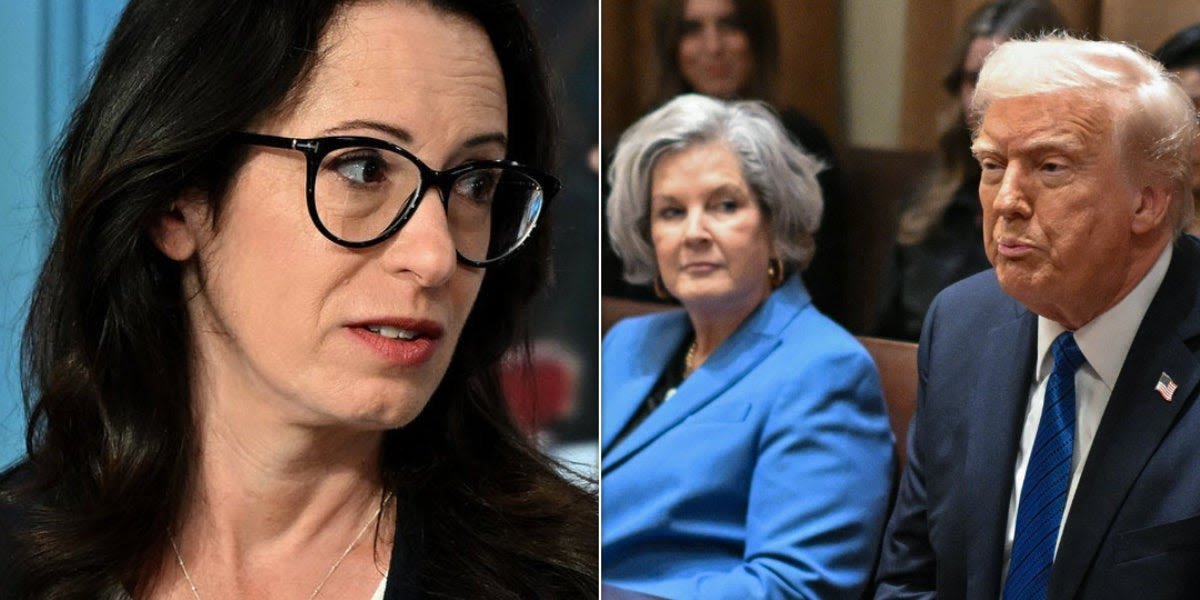
Donald Trump’s reported belief that illness equals weakness may have played a role in his decision to replace White House chief of staff Susie Wiles with Stephen Miller, according to The New York Times’ Maggie Haberman.
Speaking on Monday’s episode of the “Raging Moderates” podcast, hosted by Fox News’ Jessica Tarlov, Haberman suggested Trump’s relationship with Wiles changed after she was diagnosed with breast cancer earlier this year.
“When Susie Wiles got sick […] a couple of people have said to us privately that you can trace the beginning of chaos becoming more visible,” she said.
“Doesn’t mean it wasn’t there, but more visible and reverting to the Trump mean, around her diagnosis,” Haberman continued. “She wasn’t physically as present, she tried working through it. People knew that she wasn’t there, and Trump does not like […] illness. He sees it as weakness. And so, he started picking on her.”
Wiles publicly announced her breast cancer diagnosis in March and said she’d been given the all-clear in September. She was replaced by Miller, the architect of Trump’s hardline anti-immigration agenda, following Republicans’ sweeping defeat in the 2026 midterm elections earlier this month.
Haberman suggested there were “a lot of reasons” for Wiles departure, including questions surrounding her daughter’s work at a lobbying firm.
But the “main” reason, she argued, was that “everybody has an hourglass timer with Trump on their own timeframe of how long they’re going to last.”
She said, “You know, the egg timer turns, and the sands start falling. It is literally true for everyone. And then they can end up coming back in some fashion.”
Haberman noted Wiles’ years-long history with Trump and how she sought to delicately manage the president. But “the reality is that Trump just wants to do what he wants to do and so anybody who is going to kind of put some lines on that is going to have a problem,” she said.
“So, this was always going to end poorly this way,” Haberman added, noting that Wiles is “a transactional political figure in a way that Stephen Miller just is not.”