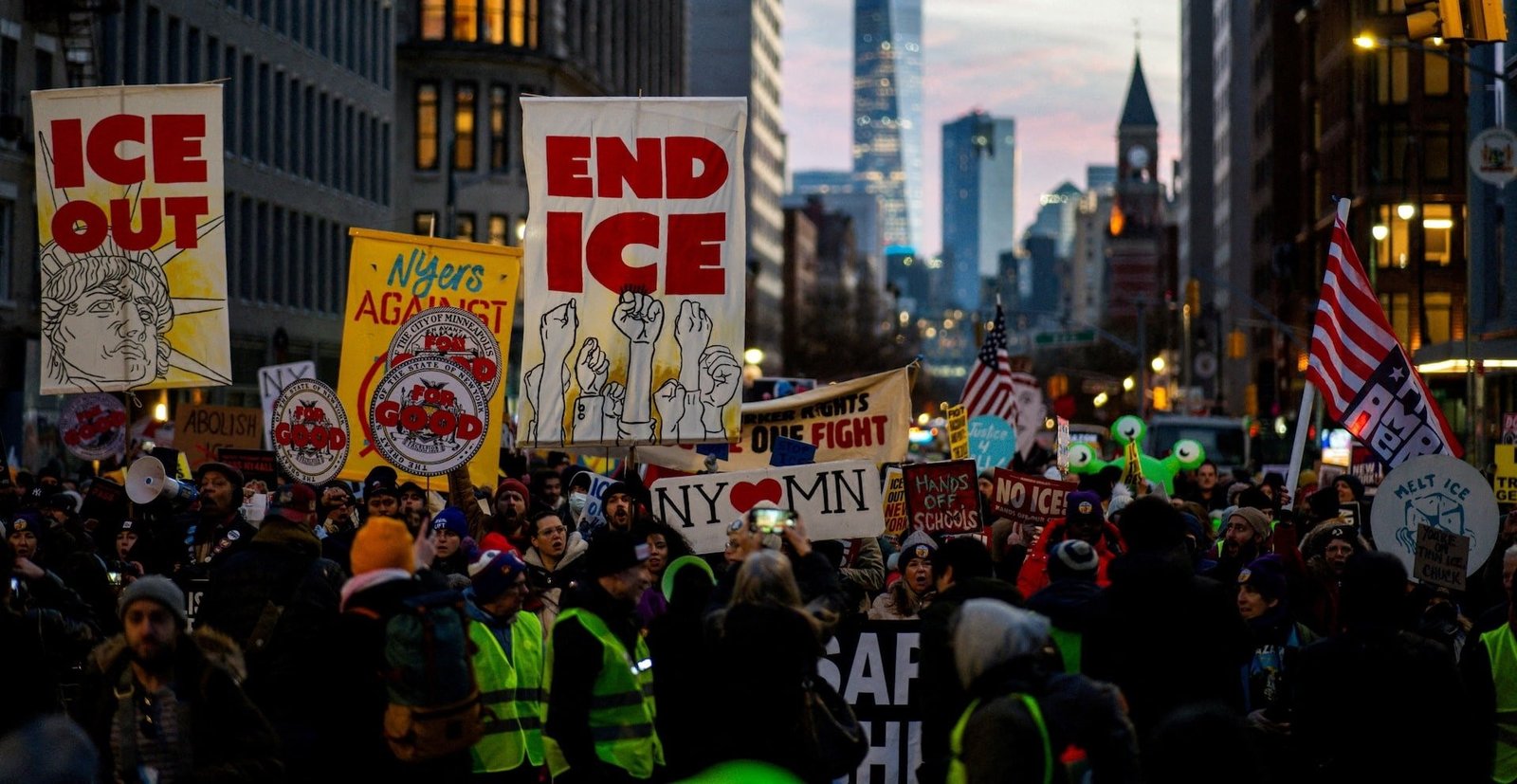
Ruling Upholds New York City’s Authority to Limit Cooperation With Federal Immigration Enforcement; Mayor Zohran Mamdani Welcomes Decision
Sadia J. Choudhury
A federal judge has dismissed the Trump administration’s lawsuit challenging New York City’s sanctuary policies, marking a significant development in the ongoing legal battle over immigration enforcement and the authority of local governments.
U.S. District Judge Ramon E. Reyes Jr. issued the ruling on October 15, rejecting the federal government’s legal challenge to the city’s policies governing cooperation with federal immigration authorities. The decision represents a setback for the Trump administration’s effort to compel New York City to play a greater role in federal immigration enforcement.
The case has drawn considerable attention among immigrant communities across New York, including Bangladeshi Americans, as questions surrounding immigration enforcement, public safety and access to city services continue to shape local debate.
What Are New York City’s Sanctuary Policies?
New York City’s sanctuary policies generally limit the circumstances under which local law enforcement and municipal agencies cooperate with federal civil immigration enforcement.
Among other provisions, the policies restrict certain forms of assistance to U.S. Immigration and Customs Enforcement (ICE), including some requests to hold individuals beyond their scheduled release from local custody and certain exchanges of immigration-related information.
City officials have maintained that local police and municipal resources should primarily serve the needs of the city’s residents rather than routinely carry out federal civil immigration enforcement.
However, sanctuary policies do not eliminate federal immigration law or prevent ICE from conducting enforcement activities under its lawful authority. The dispute centers on the extent to which the federal government can require local authorities to assist those efforts.
Why Did the Court Dismiss the Lawsuit?
The Trump administration’s Justice Department challenged New York City and the New York Police Department, arguing that the city’s sanctuary policies interfered with federal immigration enforcement.
Federal officials maintained that restrictions on cooperation could make it more difficult to identify, detain and remove individuals subject to deportation proceedings.
The city, however, defended its authority to determine how its employees and resources are used. The legal dispute raised broader questions about the constitutional limits on the federal government’s ability to direct state and local officials to administer federal programs.
In dismissing the lawsuit, the court rejected the administration’s challenge to the city’s policies. The decision reinforces the principle that the federal government generally cannot compel state and local governments to administer federal regulatory programs simply because federal officials want their assistance.
The ruling does not invalidate federal immigration law, nor does it end ICE operations in New York City.
Mayor Mamdani Welcomes the Decision
Mayor Zohran Mamdani welcomed the court’s decision, defending the city’s approach to immigration enforcement and its authority to establish policies governing municipal agencies.
City officials have argued that maintaining trust between immigrant communities and local institutions is essential to public safety. They contend that residents should feel able to report crimes, seek emergency assistance and access public services without automatically fearing that contact with city agencies will expose them to federal civil immigration enforcement.
The Trump administration, by contrast, has argued that sanctuary policies undermine immigration enforcement and can impede the removal of individuals whom federal authorities seek to deport.
The court’s decision leaves that broader political and policy disagreement unresolved, even as it rejects the administration’s legal challenge in this case.
Why the Ruling Matters to Immigrant Families
For New York’s immigrant communities, the dispute extends beyond the courtroom. It affects ongoing discussions about public safety, access to government services and the relationship between local authorities and federal immigration officials.
Immigrant advocates have argued that people are more likely to report crimes, cooperate with police and seek medical or other essential services when they trust local institutions.
New York is home to large immigrant communities from Bangladesh, South Asia, Latin America, the Caribbean and many other regions. For many families, the city’s sanctuary policies have become an important part of the broader debate over immigration enforcement and community security.
Nevertheless, the ruling should not be interpreted as granting blanket protection against deportation. Individuals may still face immigration detention or removal proceedings under applicable federal law, depending on their circumstances.
Immigration Enforcement Battle Continues Nationwide
The New York case comes amid a broader national conflict over sanctuary jurisdictions and the Trump administration’s immigration agenda.
Federal authorities have challenged policies in several jurisdictions that limit local cooperation with immigration enforcement. At the same time, the federal government has expanded efforts to work with participating state and local law enforcement agencies through programs such as the 287(g) initiative, which allows designated officers to perform certain immigration-enforcement functions under federal supervision and agreements.
New York City has not joined such an agreement.
The outcome of the New York lawsuit adds to the continuing legal debate over the balance of power between the federal government and local jurisdictions.
What Happens Next?
Although the dismissal represents a legal setback for the Trump administration, further litigation or an appeal could keep the dispute alive.
For now, the ruling rejects the administration’s challenge to New York City’s sanctuary policies. It does not abolish federal immigration enforcement or prevent ICE from exercising its lawful authority.
The decision nevertheless underscores a central question in the national immigration debate: how far the federal government can go in seeking the assistance of local authorities to enforce federal immigration laws.
For New York City, the ruling provides an important legal development in its effort to preserve its existing approach to local policing, municipal resources and immigrant-community relations.