

25 Years After 9/11: New York Has Changed, Time Has Moved On—But the Memory of Those We Lost Remains Forever
SADIA J. CHOUDHURY | NEW YORK | SPECIAL REPORT
Some days return only on the calendar. Others return in our hearts—again and again, from one generation to the next.
September 11, 2001, is one of those days.
Twenty-five years have passed. New York has changed. America has changed. The world has changed. The attacks transformed global politics, security and the lives of countless families.
Yet, for those who lost someone they loved, that morning never truly ended.
On September 11, 2001, New York began the day as it always did. The city was alive with its familiar rhythm. People were heading to work, taking their children to school, making plans for the day and going about ordinary lives.
No one knew that within hours, the world would witness one of the most devastating terrorist attacks in modern history.
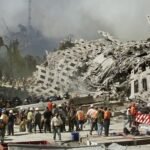
The Twin Towers of the World Trade Center fell. The Pentagon was struck. United Flight 93 crashed in Pennsylvania after passengers and crew fought back against the hijackers.
In a matter of hours, thousands of lives were lost and countless families were changed forever.
Nearly 3,000 people were killed.
Each of them had a name, a family, a story, a future and people who loved them.
Some were parents. Some were children. Some were husbands or wives. Some were friends and colleagues.
For the families left behind, their absence remains part of everyday life.
THE NAMES STILL SPEAK
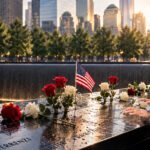
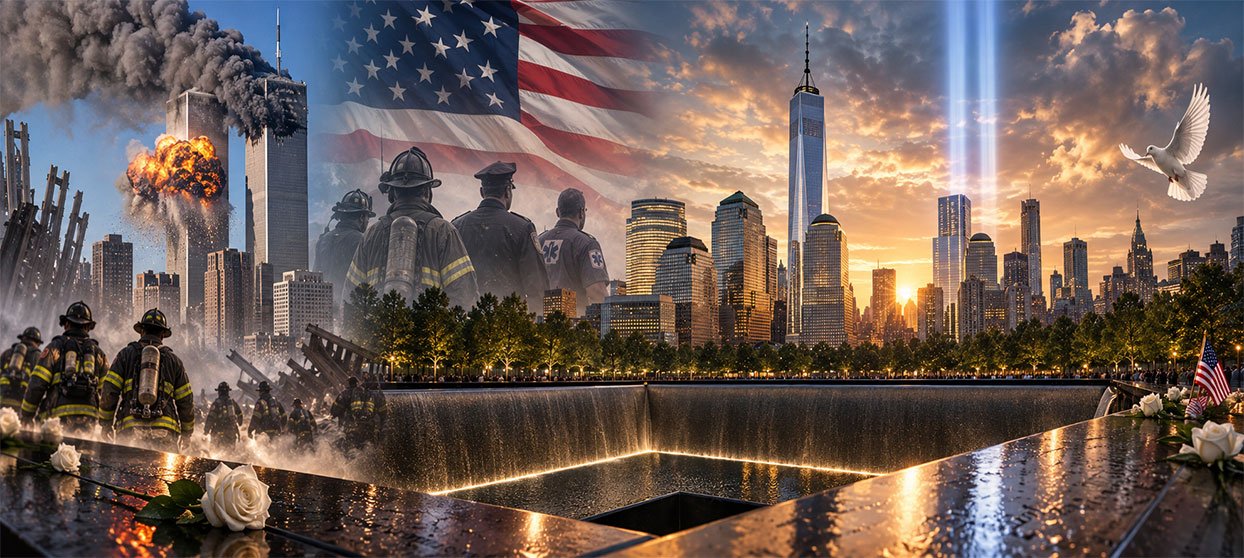
At the 9/11 Memorial in Lower Manhattan, the names of those who died are engraved around the memorial pools where the Twin Towers once stood.
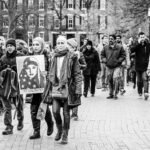
Every year, family members return.
They place flowers. They touch the names of loved ones. They stand quietly, pray and remember.
For some, the years have brought new chapters in life. But the memory of a loved one never disappears.
Death can take a person away.
It cannot erase the love, the memories or the life they left behind.
THOSE WHO RAN TOWARD THE DANGER
The story of 9/11 is not only a story of destruction and loss. It is also a story of extraordinary courage.
While thousands of people were trying desperately to escape, firefighters, police officers, paramedics, medical workers and volunteers were moving toward the danger.
They knew the risks.
They went anyway.
Three hundred forty-three members of the FDNY were killed on September 11. NYPD officers and other first responders also made the ultimate sacrifice.
But for many first responders, the consequences of 9/11 did not end when the towers fell.
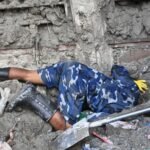
Thousands of rescue and recovery workers were exposed to toxic dust and hazardous substances at Ground Zero. In the years that followed, many developed serious illnesses linked to their work at the site.
For them, 9/11 was not simply a single day.
It became a long journey of illness, treatment, loss and remembrance.
A NEW YORK RISING FROM THE RUINS
Time did not stand still.
Where the Twin Towers once dominated the Manhattan skyline, a new World Trade Center now stands.
One World Trade Center rises above Lower Manhattan as a symbol of rebuilding, resilience and the determination to move forward.
But rebuilding did not mean forgetting.
The site where destruction once stood has become a place of remembrance, reflection and education.
The two memorial pools occupy the footprints of the original towers. Water flows endlessly into their depths, surrounded by the names of those who were lost.
The city moves forward.
The memories remain.
A NEW GENERATION MUST REMEMBER
A growing number of Americans today were not alive on September 11, 2001.
Others were too young to understand what was happening.
For them, 9/11 is history.
But history is more than a chapter in a textbook.
It is the story of real people, real families, extraordinary courage and a city that refused to remain broken.
That is why educating the next generation has become an important part of remembering 9/11.
The responsibility is not simply to remember what happened, but to understand it—and to preserve the human stories behind the history.
A MEMORY SHARED BY AN ENTIRE CITY
New York is one of the world’s most diverse cities, home to people from virtually every corner of the globe.
The grief of 9/11 crossed every boundary of race, religion, language and nationality.
In one of the city’s darkest moments, people reached out to strangers.
Medical workers worked around the clock. Volunteers came forward. People donated blood, food and supplies. Communities searched for missing loved ones and supported families who had lost everything.
Amid the destruction, humanity revealed its strength.
That may be one of the most important lessons 9/11 left behind.
TWENTY-FIVE YEARS LATER, THE PROMISE REMAINS
A city can rebuild its skyline.
Buildings can rise again.
Businesses can reopen.
Life can return to the streets.
But a lost loved one can never be replaced.
That is why remembering 9/11 is more than an annual ceremony. It is a responsibility.
A child learning about 9/11 today should understand not only how the attacks changed history, but also the courage of those who responded, the compassion of ordinary people and the resilience of a city.
Future generations should know that hatred can destroy lives—but humanity, courage and compassion can help people rise again.
Twenty-five years have passed.
The city has changed.
Generations have changed.
The world has changed.
But some names remain forever.
Some absences can never be filled.
Some memories can never be erased.
September 11 is not simply a date.
It is a day to remember those we lost.
A day to honor those who sacrificed everything.
A day to remember the strength of the human spirit.
THAT MORNING NEVER TRULY ENDED.
WE HAVE NOT FORGOTTEN. WE WILL NEVER FORGET.
NEVER FORGET — 9/11