


Death Toll Reaches at Least 165; More Than 1,000 Reported Missing as Rescue Operations Continue
Sadia J. Choudhury :
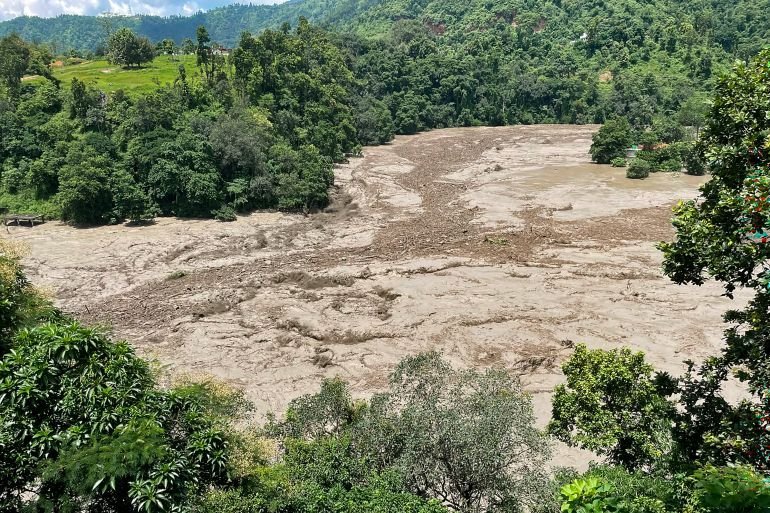
A devastating flash flood and landslide disaster has struck the mountainous region along the Nepal-China border, leaving widespread destruction and a significant loss of life. Torrents of water, mud, rocks and ice debris swept through communities, roads, bridges and other infrastructure.
At least 165 people have been confirmed dead in Nepal, while more than 1,000 people are reported missing in Nepal and Tibet. Authorities warn that the death toll could rise as rescue teams reach areas that remain inaccessible.
Several districts in northern Nepal, including Rasuwa, Nuwakot and Dhading, have been severely affected. The sudden surge of water in the Bhote Koshi and Trishuli river systems inundated large areas, destroying homes, businesses, vehicles, roads and bridges.
Glacier Collapse Believed to Have Triggered Disaster
Initial reports raised concerns that an earthquake may have contributed to the disaster. However, subsequent geological analysis indicated that a glacier collapse and massive flow of ice, rocks and debris may have triggered the catastrophic flooding.
Experts say rising temperatures and accelerating glacier melt in the Himalayan region are increasing the risk of sudden floods, landslides and other climate-related disasters.
Foreign Nationals Among the Missing
The affected region is an important route for tourists and pilgrims, including travelers heading toward the Kailash-Manasarovar area. Authorities are searching for missing foreign nationals, including visitors from India, the United States, the United Kingdom, Australia, Canada and South Korea.
Heavy damage has also been reported on the Tibetan side of the border, particularly around Gyirong, where hundreds of people are believed to be missing.
Army Leads Rescue Operations
The Nepal Army and security forces have launched large-scale search and rescue operations. Helicopters are being used to reach isolated communities, evacuate survivors and transport emergency supplies.
Rescue efforts remain extremely challenging because of damaged roads and bridges, unstable mountain terrain, strong river currents and continuing landslide risks. In several areas, communications and transportation networks have been severely disrupted.
Fears of Further Casualties
Search operations are continuing for people believed to be trapped beneath debris or swept away by floodwaters. Because several affected areas remain difficult to access, authorities fear that the number of casualties could increase.
Residents living near rivers and vulnerable mountain areas have been urged to remain alert and follow evacuation instructions.
The disaster has once again highlighted the growing vulnerability of the Himalayan region to glacier instability, extreme weather and climate-related natural disasters. For Nepal and neighboring authorities, the immediate priorities remain finding the missing, rescuing survivors and delivering emergency assistance to affected communities.