The US Army plans to detonate deteriorating explosives at an Iowa ammunition plant Wednesday morning after a federal appeals court on Monday rejected environmental groups’ bid to stop it, clearing a legal hurdle for the operation. In a statement late Monday, the Army said it’s proceeding with a controlled removal of 68 barrels of lead azide in coordination with state, local and federal authorities, which were “unanimous” in their support of the detonation.
The decision followed President Donald Trump’s move to overrule the Army’s decision to go forward with the operation, ordering the military to hold off until the court and the state’s incoming governor approve it.
“Every expert agency agrees, and both Iowa’s current and incoming Governors say the call belongs to the experts,” acting Army Secretary Adam Telle wrote on X Monday night. “We are proceeding with the controlled removal in full coordination with all state, local and federal authorities, because the safety of Iowa’s citizens comes first.”
Environmental activists, local officials and residents of nearby Middletown, however, say they are overwhelmed with concerns about health and safety over the potential risks of lead exposure from the detonation.
Lead azide, a volatile material used to detonate munitions, has long been stored behind the guarded gates of the Iowa Army Ammunition Plant — where the state’s flat, southeastern cornfields suddenly give way to the high-security military installation spanning roughly 19,000 acres. But the material’s long-term storage has allowed it to recrystallize within its containers, making it vulnerable to spontaneous detonation, according to the Army.
The federal government had planned to blow up the nearly five tons of hazardous material containing lead azide where it sits at the plant, secured under layers of earth and concrete — deeming a controlled detonation to be the only safe way to treat it, even though doing so could unleash remnants into the atmosphere, groundwater and neighboring towns.
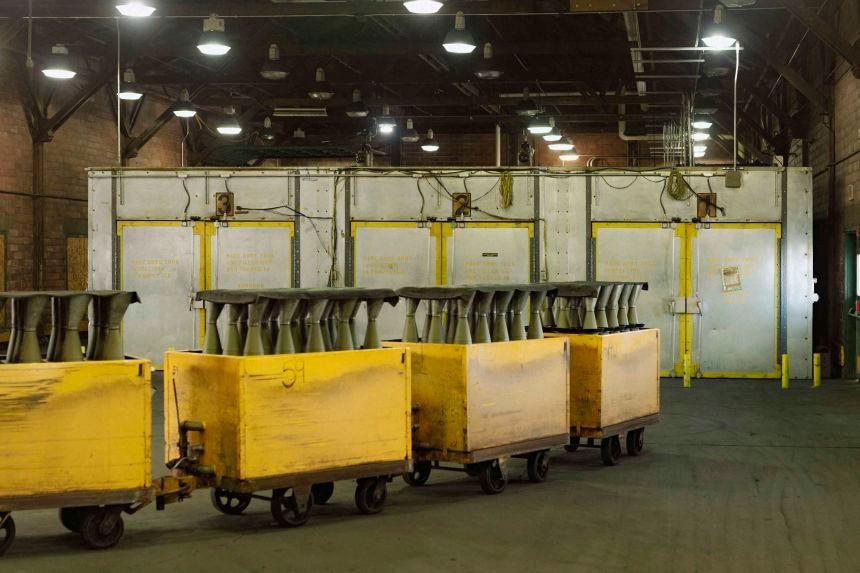
US Army to detonate explosives in Iowa on Wednesday after court green-lights plan