


The United States military has overseen scores of secretive ship-to-ship oil transfers to keep Gulf energy exports flowing, using aerial and water drones as well as helicopters in an operation to guide convoys to awaiting tankers.
The operation on the edge of the Strait of Hormuz employs a shuttling technique long used by Iran to skirt sanctions. Two specific locations where the oil transfers take place were identified by 11 people familiar with the operation – one off the coast of Fujairah in the United Arab Emirates and the other off Oman’s port of Sohar. It started in early May, and at least 92 ships have been involved in the transfers, according to shipping data and satellite imagery reviewed by Reuters.
Google News LinkFor all latest news, follow The Daily Star’s Google News channel.
As recently as June 11, 17 pairs of ships could be seen carrying out simultaneous oil transfers at the two sites, according to satellite images reviewed by Reuters.
An Apache helicopter downed by Iran on June 9, sparking retaliatory bombings by the US, was involved in the mission, according to four sources, including a former US official with knowledge of the attack. Using satellite imagery, Reuters counted six pairs of tanker ships clustered together in a small area off the port of Sohar the day the Apache was shot down.
Reuters could not confirm what role the Apache played in the operation. In response to Reuters questions, a US defense official said no Central Command forces are taking part in an offshore ship-to-ship oil transfer operation. Both crew members were rescued by a drone boat, US officials said.
The extent of the ship-to-ship transfers, how they work, and the Apache’s role in the operation have not been previously reported. The White House referred questions to Centcom. The Iranian government did not respond to requests for comment about the transfer operation.
The two spots where these transfers take place, in the Gulf of Oman near the exit of the Strait of Hormuz, are close to the boundaries drawn by the Persian Gulf Strait Authority, a new Iranian body established to manage the Hormuz Strait. Ships that fail to comply with Iran’s orders are at risk of drone and missile attack by the Islamic Revolutionary Guard Corps.
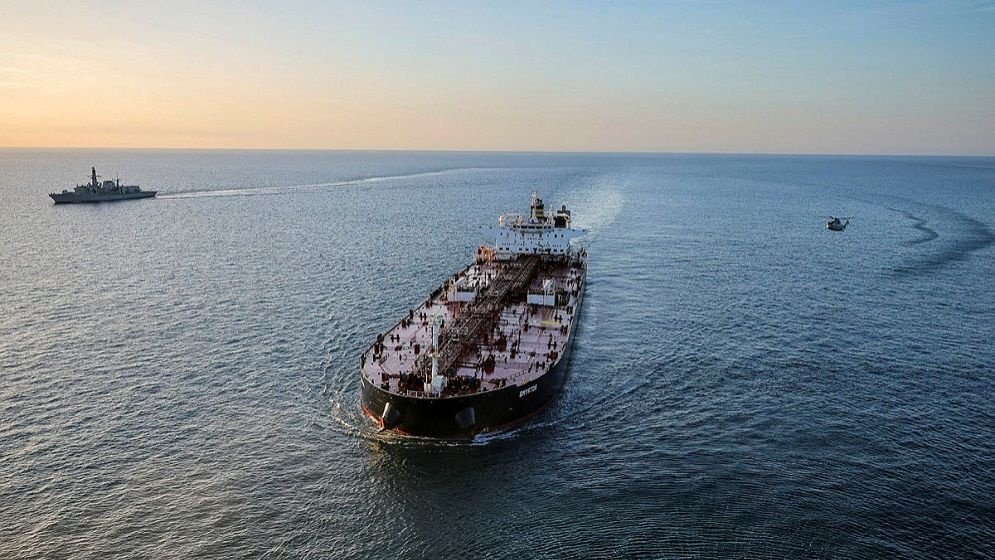
The US is using an Iranian smuggling tactic to sneak oil out of the Gulf