


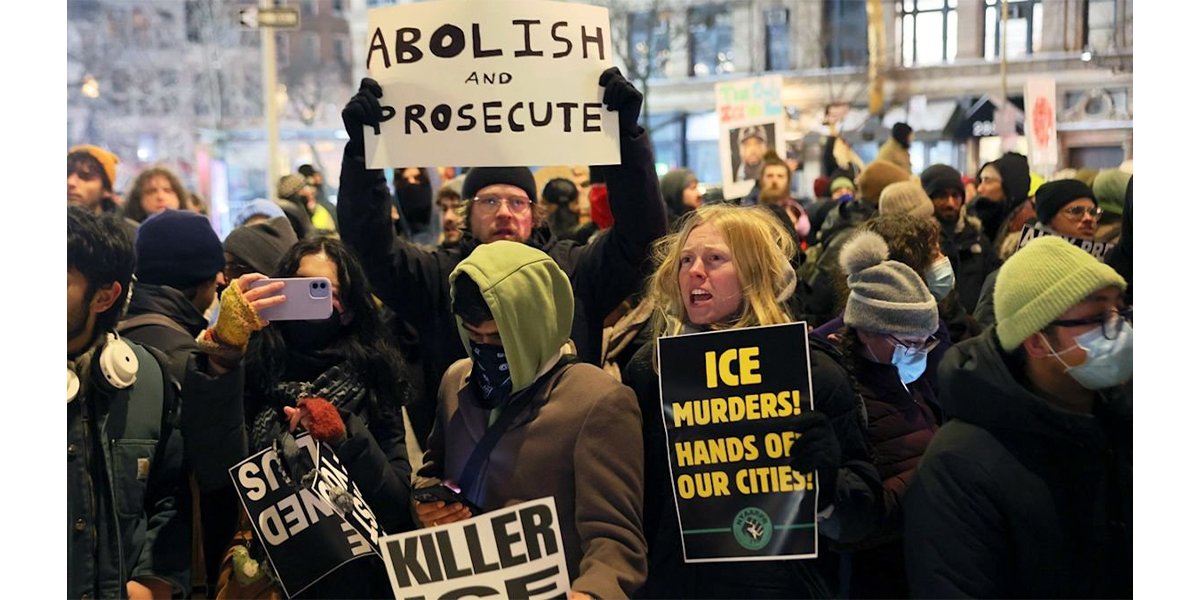
New York City Mayor Zohran Mamdani on Monday blasted the federal government for waging a “campaign of violence and terror” against the immigrant communities he described as the backbone of the city.
He made the statements during an announcement that he and five other sanctuary jurisdictions are suing the Trump administration over a new rule expanding how immigration officials determine whether applicants are likely to become a public charge.
“The federal government has waged a campaign of violence and terror,” Mamdani said.
“ICE has broken into our neighbors’ homes, work sites and schools. And it has targeted those who have come to our country in search of refuge and in search of opportunity. These actions are an assault on our civic fabric, on our shared values. And no matter how much destruction they have already caused, it continues.”
Mamdani further credited immigrants from around the world with helping build and sustain New York City, including by contributing to its infrastructure and public services.
“Immigrants from every country, from every continent, who speak every language and worship in every conceivable way, drive our buses and our trains, teach our children how to read, and tend to us when we are sick,” Mamdani said.
“Immigrants fought for the 8-hour workday for fair pay and workplace protections that deliver dignity into the lives of so many,” he added.
The city will lead a coalition of five other sanctuary jurisdictions, including Chicago, San Francisco, Seattle, Santa Clara County and King County, in challenging the Trump administration’s stricter version of the public charge rule, which is set to take effect Friday.
The changes, issued in July by the Department of Homeland Security (DHS) and U.S. Citizenship and Immigration Services (USCIS), will expand officers’ discretion to weigh noncash benefits, such as Medicaid, SNAP and housing vouchers, when determining whether an immigrant is likely to become a public charge.
Under the previous guidelines, established in 2022 under the Biden administration, officers’ discretion was narrowed to consider only whether applicants were likely to become “primarily dependent” on government assistance based on cash benefits, such as Supplemental Security Income (SSI) and Temporary Assistance for Needy Families (TANF).
Mamdani Blasts Feds for Waging ‘Campaign of Violence And Terror’ Against NYC’s Immigrants