A group seeking to end New York City’s closed primaries filed a new batch of 75,000 petitions with the City Clerk this week, marking its latest push to open city primaries to voters of all parties.
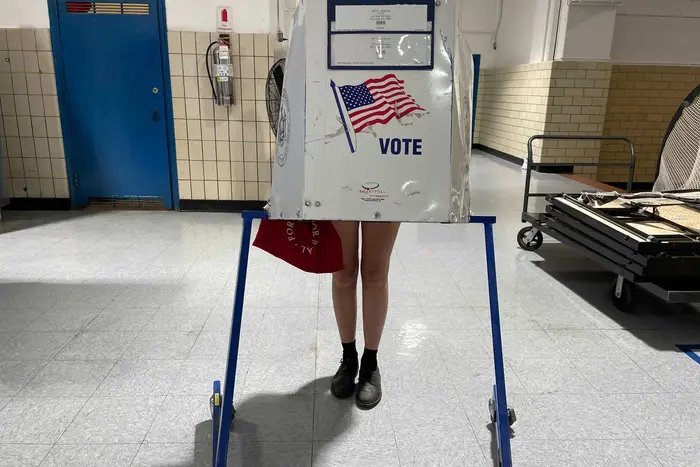
New York City is famously blue, with registered Democrats outnumbering Republicans six to one. So the city’s Democratic primaries tend to be the unofficial general elections for many candidates, cutting out a wide swath of voters who are not registered Democrats.
The group Unite NY is trying to put a question on the ballot asking voters to change that system ahead of the next mayoral election in 2029. They argue the current closed primary system disenfranchises more than 1 million city voters each cycle during a crucial step in the municipal election system.
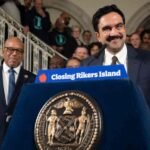
But they have a big opponent in Mayor Zohran Mamdani, who has said he thinks the city’s current primary system is working well. He won his party’s nod last June with 56% of the vote, beating former Gov. Andrew Cuomo by nearly 13 percentage points.
Their proposal would make the June primary a preliminary election, open to all registered voters, who would then use ranked-choice voting to pick up to five candidates in order of preference. The top three finishers would advance to a final election in November that would also use ranked-choice voting.
The change would likely mean a general election with multiple Democratic candidates because of the party’s significant enrollment advantage. This is often the case in neighboring New Jersey cities like Newark and Jersey City that operate nonpartisan municipal elections.
“ Voters who pay taxes should participate in all elections, period,” said Anthony Thomas, the executive director of Unite NY. “And right now, we’ve got 1.1 million and growing New Yorkers who can’t participate,” he said, a reference to the number of registered voters who are not affiliated with a political party. Those voters are referred to by the Board of Elections as “blanks.”
Proposals to reform the city’s partisan election system have been debated for decades, particularly among the city’s independent voters. And as the ranks of unaffiliated city voters continue to swell, good government groups have also voiced support for opening primaries to all registered voters.
But the Mamdani administration, which was swept into office with record-high voter turnout, has remained opposed to these changes. This is Unite NY’s second attempt this year to force a question on the ballot about opening up all city elections to unaffiliated voters.
Typically, voters weigh in on ballot questions set by a charter revision commission, made up of appointees by the mayor or the City Council. Mamdani appointed a commission earlier this year that ended up putting five ballot questions before voters. Voters adopted all five earlier this month.
But another way for New Yorkers to get a question on the ballot is to gather thousands of signatures from registered voters here in the city.
Last July, Unite NY filed more than 45,000 petitions trying to force a question onto the ballot about the city’s election system. A month later, the city clerk tossed the group’s first set of petitions after the Board of Elections said they contained an insufficient number of valid signatures. Unite NY filed a lawsuit over the decision and asked the court to order the board to review the signatures line by line. The parties were last in court in October for oral arguments.