


Shah J. Choudhury:
Four lives. One family. One home that once held memories, hopes, and ordinary dreams has now become the scene of an unimaginable tragedy.
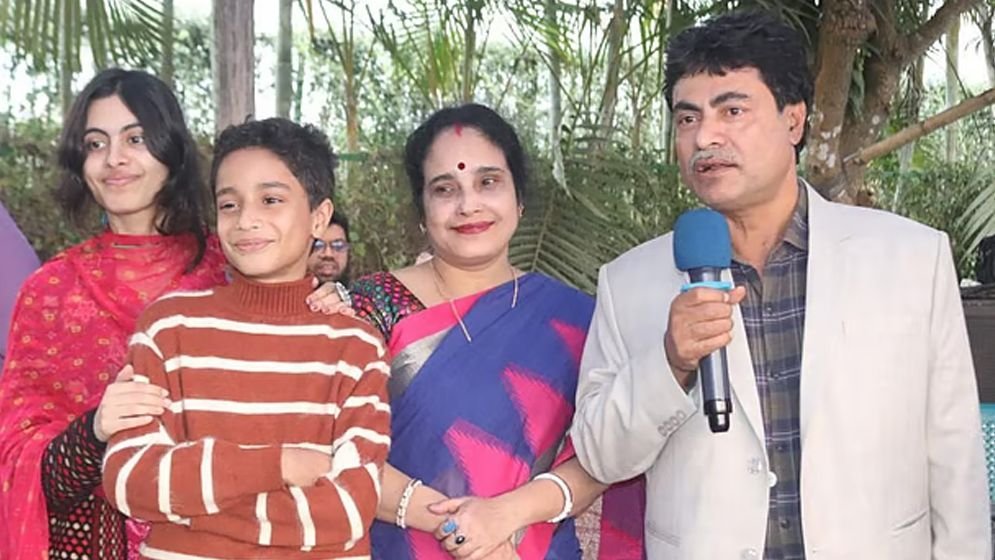
The brutal killings of retired Rangpur Zilla School teacher Ganapati Chakraborty, his wife Pritilata Chakraborty, their daughter Agami Chakraborty, and their younger son Priyam Chakraborty are not merely a criminal case. They are a profound test of our conscience, our justice system, and our commitment to truth.
According to information attributed to law enforcement, two young men have been arrested in connection with the killings. Reports have also referred to an alleged confession and suggested that the suspects went to the teachers’ home intending to use drugs and allegedly disconnected the electricity to avoid CCTV surveillance.
But an alleged confession is not the same as a proven fact. An accusation is not a conviction. And information circulating on social media should never be treated as established truth without independent verification.
Particularly concerning are unverified claims circulating online regarding possible sexual assault and biological evidence involving the deceased daughter. Until such claims are officially established through proper forensic examination, they must remain allegations—not facts. Responsible journalism requires restraint, especially when dealing with victims who can no longer speak for themselves.
The central questions remain: Who killed the four members of this family? Why were they killed? How was the crime carried out? And what does the complete body of forensic and circumstantial evidence reveal?
These questions cannot be answered through social media speculation.
There is another danger we must confront. Before the investigation has reached its conclusion, some are attempting to frame the incident solely as a “drug-related crime,” while others are trying to push it into a communal or religious narrative. Both approaches can be deeply harmful if they move public attention away from the evidence.
A criminal investigation must follow evidence—not emotion, political agendas, religious identity, or public pressure.
Four human beings have lost their lives. Each had a family, relationships, memories, and dreams. Their deaths should not become fuel for communal hatred, political rhetoric, or sensationalism.
We do not need to choose sides. We need to stand on the side of truth.
What is needed now is a completely impartial, transparent, and evidence-based investigation, including comprehensive autopsies, forensic analysis, DNA testing, examination of CCTV and digital evidence, and careful evaluation of every witness statement and piece of physical evidence.
The value of four human lives is greater than any political narrative.
The grief of a family is deeper than any social-media rumor.
And justice cannot be built upon stories created before the evidence is known.
No rumors. No communal hatred. No premature conclusions.
Let the truth be established through evidence, let the genuine perpetrators face the full force of the law, and let justice be delivered to the four innocent lives lost in Rangpur.