


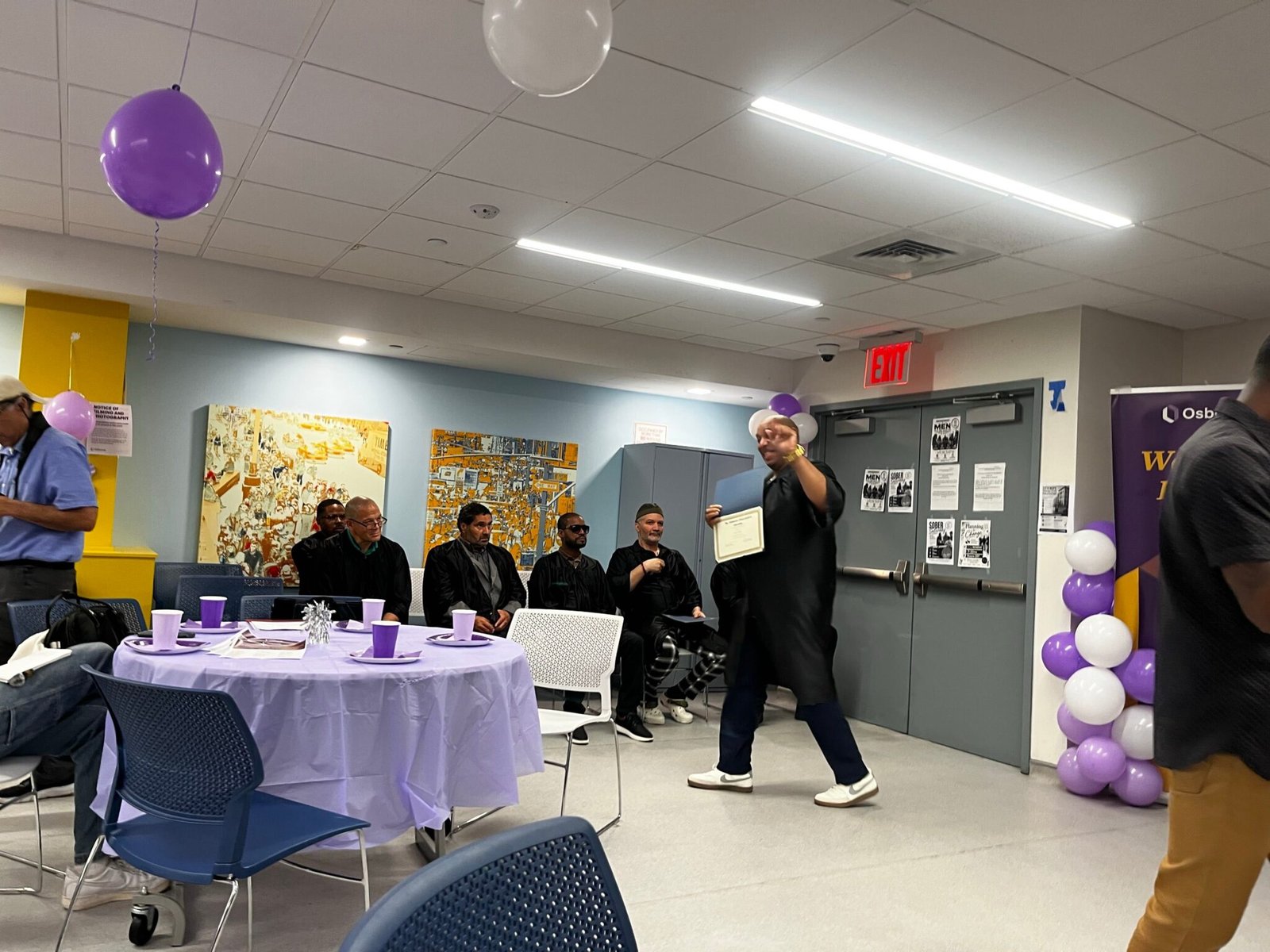
In a balloon-filled cafeteria on Friday, nearly a dozen formerly incarcerated men graduated from a job readiness program. They donned black graduation gowns and stepped to the sound of the 1970s classic “Ain’t No Stoppin’ Us Now.”
The graduates are all residents of the Fulton Community Reentry Center in the Bronx, a first-of-its-kind shelter that provides 140 beds to formerly incarcerated men over the age of 40. The seven-story building was formerly a prison, reinvented as a shelter designed to offer a fresh start.
More than 100 men have completed the job readiness program run by Osborne, a service provider for New Yorkers impacted by incarceration. About half the graduates have already entered the workforce.
Transitional housing programs for formerly incarcerated people are few and far between in New York. Osborne’s Fulton Community Reentry Center is one of two New York City Department of Social Services programs, and a small handful in the city’s total, that provides beds for people transitioning from prison back into society. It’s something Erin Dalton, the Commissioner of the Department of Social Services, said the city plans to start doing more of.
“ It’s really important to me that our system work for people that have the most barriers,” Dalton said.
More commonly, people who don’t have friends or family to return to after leaving prison wind up in New York City’s Department of Homeless Services shelter system. About 43% of New Yorkers leaving a state prison end up in city shelters, according to the 2025 State of the Homeless report. While most shelters offer some support, they are not designed specifically to help formerly incarcerated people re-enter society.
At Friday’s ceremony, a teary-eyed Angel Fabian, 56, took to the podium to share his experience with the job readiness program. After completing the training, he said he attended an interview for a maintenance position at another shelter. He was rejected for that position — and offered a job as a supervisor instead.
He unzipped his graduation gown to show off his supervisor badge as the cafeteria erupted in applause.
His new coworkers, he said, show him that “ you work, you put your best foot forward, things will lead… it will just fall into place.”
Neha Sharma, a spokesperson for the city Department of Social Services, agreed that such programs are vital.
“The Mamdani Administration is prioritizing support for this population, and DHS is committed to investing in models like the Fulton Community Re-Entry Center to support vulnerable New Yorkers,” she said.