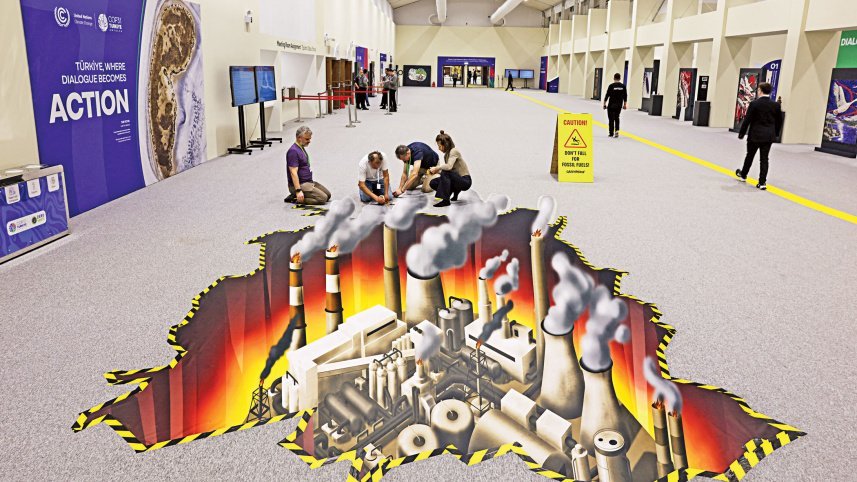
COP31 co-host Australia yesterday released the first draft of a broad political deal that includes a call for nations to speed up the phaseout of planet-heating coal, oil and gas.
The draft decision needs ultimate approval by nearly 200 nations at the UN climate summit in Turkey where the future of fossil fuels has been among the most heated issues.
The proposed agreement lays out the competing positions of governments in Antalya and underscores how far apart they remain with a consensus deal due by Friday.
The draft “calls for accelerated action to phase out fossil fuels, including through the immediate transition away from fossil fuels in energy systems”.
It also evokes “deep concern” over the impending breach of the Paris accord’s 1.5C target and recognises the “central role of the best-available science” of the IPCC, the global authority on climate change.
Many countries, particularly in Europe and climate-vulnerable developing nations, have pushed for a reference to the IPCC and urged a faster exit from fossil fuels in the final text.
The text also calls for a “tripling” of finance for climate adaptation measures in developing countries to reach at least $120 billion, a key demand of these nations.
Australia, which is steering the marathon talks, wants to produce an overarching political statement summing up what countries have agreed in Antalya and setting the course for future climate action.
Meanwhile, UN’s climate chief told COP31 talks yesterday that artificial intelligence offers both “great potential” and “great peril” for the battle against global warming.
Simon Stiell spoke at the launch of the voluntary “Antalya Artificial Intelligence Pledge” by COP31 host Turkey, which seeks to tap the technology’s potential in finding climate solutions as well as assess its growing environmental risks.
“We have arrived at a technological moment of both great potential and great peril. AI and other frontier technologies are a double-edged sword,” Stiell said.