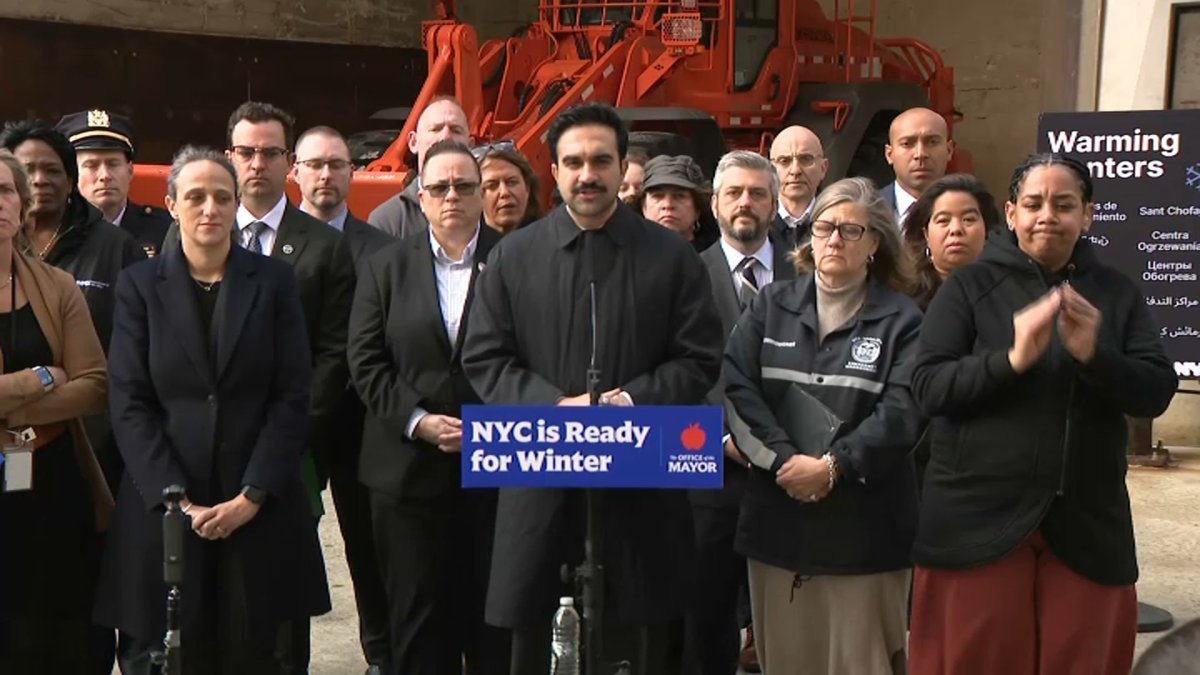
Mayor Zohran Mamdani announced an expanded winter response saying New York City “will be ready” when severe weather comes during the cold months.
The updated winter preparedness plans comes after the deadly winter the city experienced last season when at least 20 cold weather-related deaths were reported.
“We will be ready,” Mamdani said, later adding that last winter was not the norm. “There were days when parts of our city were colder than Antarctica.”
The previous winter season also resulted in frozen bus stops unplowed for days and complaints from Staten Islanders that plows had forgotten them.
Mamdani said last winter’s response was part of the city’s outdated strategy.
“What we found in a lot of what we inherited is an approach that doesn’t meet the scale when it comes to the kind of winter we had,” he said.
NYC Emergency Management Commissioner Christina Farrell also said that the expansion of preparedness response looks to help everyone, including the most vulnerable populations.
“Throughout 2026, we have been working closely with our partner agencies, nonprofit agencies, elected officials and other stakeholders to update our winter plans and include all that we learned during the extreme cold temperatures and snowstorms that New York City experienced earlier this year,” Farrell said in a statement. “Winter weather can be dangerous for everyone, but particularly for vulnerable populations. With just a few weeks until the official start of the winter, we encourage New Yorkers to review and update their winter heating safety and emergency plans. Visit nyc.gov/beready to get started.”
What does the expanded plan call for?
Mamdani directed on Monday that $25 million go toward a revamped Code Blue plan.
When it comes to getting the homeless off the streets when the weather turns dangerously cold, the city is also launching a new approach after hiring more than 300 additional canvassers going block by block looking for anyone, instead of searching for specific people on a list.
The city added 600 beds known as “low barrier” shelters. The city is also hiring more nurses who will partner with outreach teams during extreme weather conditions to check on people’s health and safety, according to the city.
When it comes to medical needs during hazardous conditions, the city will set up 55 NYC Health + Hospitals (H+H) WARM mobile units with medical support and transportation to warming centers, medical facilities and other warm locations. Each team will include a registered nurse or nurse practitioner.
These new measures will build on existing Code Blue practices, including wellness checks on older adults by NYC Aging and open-door policies across the DHS shelter system.
“We tested this canvassing approach during the summer Code Red and it worked,” NYC Commissioner of Social Services Erin Dalton.
Additionally, the city will also be hiring 300 more outreach workers to approach homeless New Yorkers. There will also be 22 more warm mobile units and 120 mini snow blowers for sidewalks instead of solely relying on workers with shovels.
“We purchased 120 snow blowers durable enough for New York City winter but light enough to be moved where they have to go,” NYC Sanitation Commissioner Greg Anderson said.
This winter, for the first time, Department of Housing Preservation and Development (HPD) will respond to every heat complaint that is not anonymous, instead of grouping complaints from multiple apartments in the same building and closing out all the complaints when the first is resolved.
In extreme cases where a landlord fails to correct a heating issue, HPD will make emergency repairs, restore services and bill the landlord. Those building that repeatedly fail to provide heat. For buildings that repeatedly fail to provide heat will face court orders for repairs and receive civil penalties if deemed appropriate.
When it comes to housing, NYCHA has a reserve of mobile boilers that can be deployed during a severe heating emergency. Twenty-two mobile boilers are currently connected to developments, with four more units available if needed.
The agency also spent the year preparing its public housing for the cold months conducting “preventative maintenance, inspections and necessary repairs on every single piece of its heating infrastructure: 965 boilers, 1,472 hot water systems and 1,507 heat distribution systems,” according to the city.
Last month, NYCHA cut the ribbon on a new, state-of-the-art, 12,271-square-foot heating training facility that aims to provide hands-on teaching or all 654 active frontline heating workers and future agency hires.
The city is also looking how to better protect New Yorkers from rising utility courses including canvassing all boroughs to help residents lower their energy bills through the Enhanced Energy Affordability Program (EEAP). The city is also working with utilities to coordinate and prepare for outages.
Snow days or remote learning?
During his press conference detailing the updated extreme weather efforts, Mamdani also addressed whether NYC Public Schools students will get traditional snow days or remote learning.
His answer? It all depends on the nature of the weather event, but he did mention that because of additional holidays added to the school calendar and the state-mandated 180 days of instruction, “there is very little flexibility, but it depends on the day itself.”