

At least 12 killed, 309 injured; two Bangladeshis among the dead as global leaders urge an end to attacks on civilians
Sadia J. Choudhury:
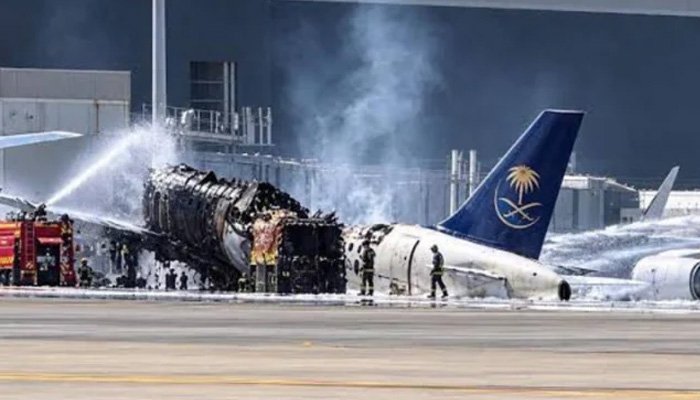
— Governments and international leaders have condemned a deadly missile attack on Saudi Arabia’s King Khalid International Airport in Riyadh that killed at least 12 people and injured 309 others, according to Saudi authorities. The victims included two Bangladeshi nationals, four Saudi citizens, and nationals of the United States, Jordan, Palestine, Syria, Sudan and Egypt.
The attack on Saturday marked the third reported strike targeting Riyadh’s international airport within a week, raising concerns about civilian safety, regional stability and the potential expansion of the conflict involving Yemen’s Houthi movement and Saudi Arabia.
Saudi authorities temporarily suspended airport operations and diverted flights following the strike. Some of the injured were reported to be in critical condition.
International Leaders Condemn the Attack
United Nations Secretary-General António Guterres strongly condemned the attack, stressing that strikes against civilians and civilian infrastructure violate international law and must stop immediately. Hans Grundberg, the UN special envoy for Yemen, warned that attacks on civilian airports represented a serious escalation and threatened regional security and efforts to achieve peace in Yemen.
U.S. President Donald Trump described the attack as “terrible” and said Washington was considering whether to join Saudi military operations against the Houthis. U.S. Secretary of State Marco Rubio confirmed that an American citizen had been killed and expressed condolences to the victims’ families.
Pakistan’s Prime Minister Shehbaz Sharif also condemned the attack, emphasizing that assaults on civilians and critical infrastructure threaten regional peace and stability.
Qatar, Egypt, Jordan, Oman, India, Japan, Canada, Malaysia and other countries also expressed condemnation, called for civilian protection and reaffirmed the importance of regional security.
Saudi Arabia Vows a Response
The Saudi-led coalition blamed Yemen’s Houthi movement for Saturday’s strike and described it as a serious violation warranting a firm response. The incident came amid intensified fighting between Houthi forces and forces aligned with Yemen’s internationally recognized government, which is backed by Saudi Arabia.
The Houthis subsequently renewed warnings to airlines, travelers and airport personnel against using Saudi airports and airspace, warning of further attacks. The group has linked its actions to Saudi military operations in Yemen.
The escalation follows a renewed Saudi-backed offensive against Houthi-held territory and the breakdown of a fragile period of relative calm. Previous attacks earlier in the week had also caused casualties and damaged a Saudi commercial aircraft, according to reports.
Fears of a Wider Regional Conflict
The latest attack has heightened concerns that the conflict could spread beyond Yemen and Saudi Arabia, potentially drawing in additional regional and international actors. Any further military escalation could disrupt aviation, threaten civilian infrastructure and complicate diplomatic efforts to end the fighting.
For now, the immediate priorities remain the treatment of the wounded, the safety of civilians and the restoration of secure airport operations. International leaders have called for an end to attacks on civilian facilities and urged restraint to prevent further loss of life.
The situation remains fluid, with the possibility of further military action raising fresh questions about the prospects for regional de-escalation.