


Reuters: Hundreds of supporters of India’s youth-led “cockroach” movement gathered in the capital New Delhi on Monday to march on parliament, seeking the resignation of the education minister despite police denying permission for the protest.
The months-old movement and the planned protest is seen as the biggest public challenge to Prime Minister Narendra Modi in his third term in office, ganering millions of supporters on social media and mobilising support on ground as well.
The movement has been galvanised since police forcibly moved hunger-striking activist Sonam Wangchuk to hospital on Saturday, with thousands of supporters arriving through the night at the protest site of Jantar Mantar in the heart of New Delhi for the march on the opening day of parliament’s monsoon session.
Scores of police and paramilitary security personnel were also deployed at the heavily-barricaded site, threatening a stand-off a few km (miles) from parliament if the protesters seek to go ahead with their march.
“Quit, quit,” the protesters chanted. “Dharmendra Pradhan quit”, “Narendra Modi quit”, they chanted in Hindi referring to the education minister as well as the prime minister.
The Cockroach Janta Party (CJP) movement began after national medical school entrance test papers were leaked in May, affecting more than 2 million students as it forced them to write the test a second time.
“All these leaders in power are illiterate and I am here to protest because we do not want question papers to leak,” said Adi Nathan, 21, a student from Meerut city, about 100 km (60 miles) from the capital. “This should come to an end.”
Mohammed Tabrez, 22, a student preparing for competitive examinations that allow students admission into professional courses or jobs, said he had come from Amroha in Uttar Pradesh state, about 165km (100 miles) away.
“We want this corruption to end,” he said. “We want all the frauds in paper leaks, in competitive examinations to end and this is the reason I have come here.”
Activist Sets Terms to End His Fast
The CJP initially drew support largely online, amassing 22 million followers on Instagram within days before broadening its appeal and drawing the support of some opposition parties.
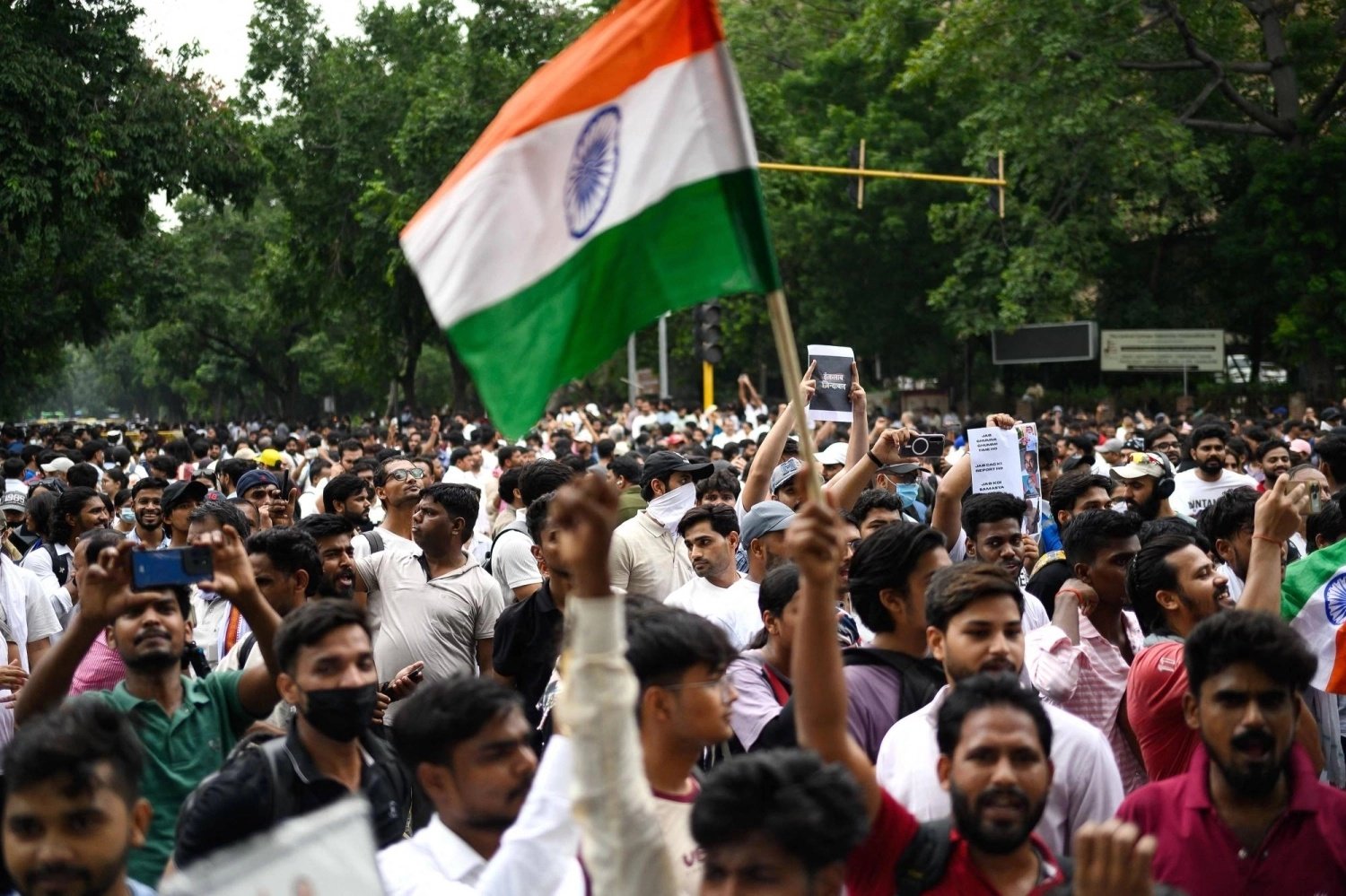
India’s Cockroach Movement Supporters Gather To March Despite Police Ban