

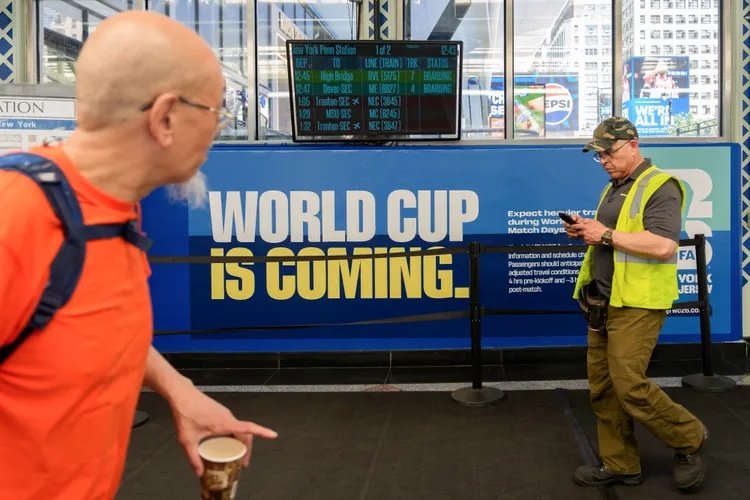
The U.S. economy could add $22 billion to $76 billion to GDP this quarter because of the World Cup, according to one estimate.
Businesses, from hotels to airlines to tourist traps, are counting on an influx of visitors this summer to offset some of the economic drags experienced so far this year.
However, some businesses are concerned that the number of overseas visitors will fall short of expectations due to geopolitics.
If you go to the Lion Sports Bar in Center City Philadelphia during any soccer match, you’ll likely find the place crowded with fans.
Go there during the World Cup matches later this month, and you’ll be lucky to even get in the door.
“It’s gonna be an absolute madhouse,” owner Mark Primzinger said. “We get absolutely packed with people shoulder to shoulder to begin with.”
Primzinger is one of many business owners across North America counting on a boost when the international tournament is held in North America between June 11 and July 19. Matches will be played in 11 U.S. cities, including Philadelphia, Houston and Miami.
Visitors from Japan, Australia, South America, and Europe have already bought tickets to watch parties at The Lion, so Primzinger is expecting a horde of international visitors. To prepare, he’s hired 10 extra staff members and rented a sushi bar across the street to serve as a temporary expansion.
Hotels, tourist traps and many other parts of the U.S. economy are all hoping for a similar windfall.
Why the Tournament Could Boost the US Economy
The total economic impact of the FIFA World Cup soccer tournament could be significant, adding anywhere from $22 billion to $76 billion to the gross domestic product for the quarter, forecasters at BMO Economics said in a commentary last week.1
The impact has already shown up in economic statistics: Some economists credit the tournament with adding 70,000 jobs in the leisure and hospitality sector in May.
The State Department estimates will bring in 5 million to 7 million visitors.2 BMO estimates that foreign fans will bring a much larger economic benefit than domestic fans, since U.S. residents who travel to the matches are likely just shifting money they would have spent elsewhere in the country.
An influx of tourism dollars would be a welcome boost to the economy.1 The hospitality industry has felt the impacts of a decrease in foreign tourists to the U.S. The number of international visitors declined 5.5% in 2025, according to the International Trade Administration.
From Sports Bars to Roadside Attractions, Everyone Wants a Share
Venues in San Francisco, the site of six matches, have rolled out red carpets for international visitors, organizing watch parties, fan zones and special events in anticipation of throngs of visitors.
Other kinds of businesses hope to get a boost from people looking for things to do between matches.
In the Kansas City area, businesses many miles from Arrowhead Stadium—where six matches are being played—hope to benefit from the arrival of tourists.
Lisa and Ron Lessman, the owners of the Truckhenge junk sculpture roadside attraction about an hour’s drive from the stadium, are hoping for a few sports fans making a detour to see their unique piece of Americana.
Travel Concerns Could Limit the Economic Impact
Some industry groups have raised concerns that the number of travelers will be lower than initially anticipated. A survey of hotel owners by the American Hotel and Lodging Association published earlier this month showed 80% of establishments had fewer bookings than they had initially forecast, and that “visa barriers and broader geopolitical concerns” were stopping many would-be travelers from coming to America.3
In San Francisco, event organizers scaled back their expectations and budgets after learning the top-ranked teams wouldn’t be playing in the city, Alex Bastian, president of the Hotel Council of San Francisco, said.
The recent rise in fuel prices has also pushed up travel costs, potentially adding another drag on tourism, according to the AHLA report.