

Gov. Kathy Hochul and her Republican rival Bruce Blakeman are staking out different stances on vaccines, with a newly passed mandate for children waiting in the wings.
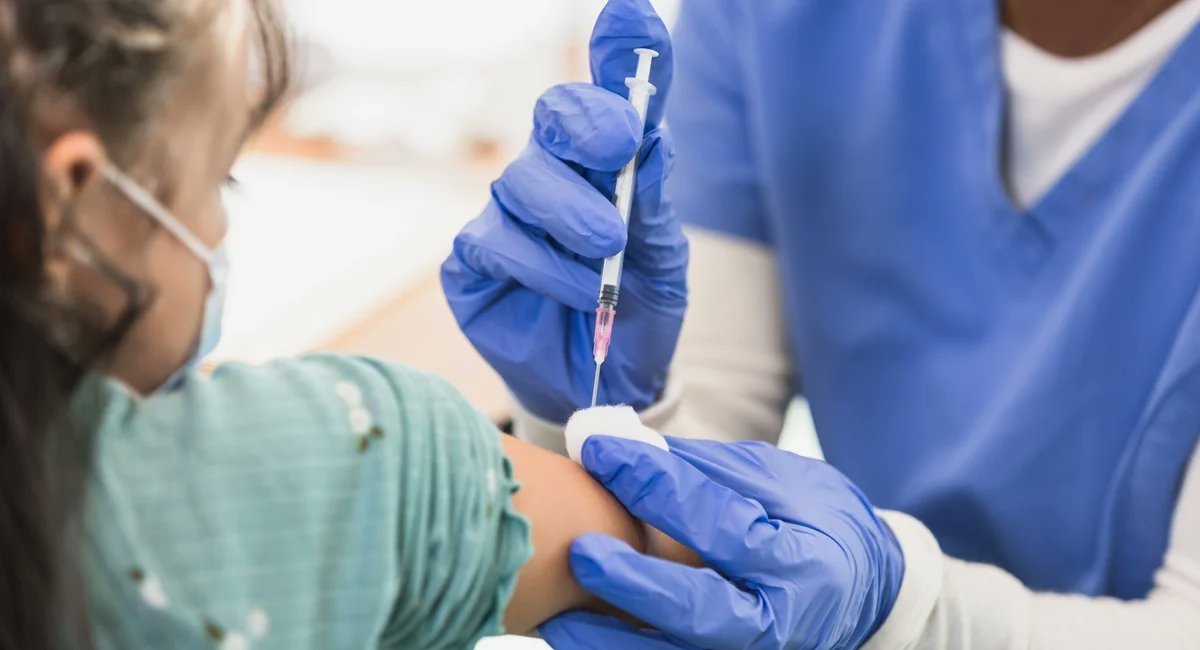
Lawmakers in Albany recently passed a bill that would require children attending summer camp to be up-to-date on their vaccines, one of several pieces of legislation passed this session that aim to bolster vaccine mandates and uptake in New York.
While Hochul, a Democrat, has vowed to protect vaccine access as the Trump administration attempts to scale back childhood vaccine recommendations, Blakeman has questioned vaccine mandates and said the camper bill “sounds un-American.”
Their differences arise as New York and a coalition of states have banded together to oppose efforts at the federal level to unwind recommendations on a wide range of vaccines — even as several states combat measles outbreaks and the return of other infectious diseases once regarded as eradicated.
School-aged children in New York have high vaccination rates because of vaccine requirements that don’t allow for religious exemptions. In the 2024-2025 school year, for example, 97.8% of kindergarteners statewide were vaccinated against measles, at a time when a growing number of 5-year-olds in other states were going unvaccinated because of exemptions, according to data from the U.S. Centers for Disease Control and Prevention.
But camps are allowed to set their own policies — and have at times been the site of disease outbreaks, according to the state health department.
Blakeman made the case against requiring vaccines in summer camp in a recent interview with Michael Kane, director of advocacy for the Children’s Health Defense, the organization previously chaired by U.S. Health Secretary Robert F. Kennedy Jr., which has spread misinformation linking vaccines to autism.
In the interview, which Kane posted on his Substack page, Blakeman cast doubt on strict vaccine requirements more broadly, questioned the science behind vaccines and championed religious freedom.
“Medical decisions, important decisions, need to be made between the physician and the patient,” Blakeman said. “There has to be overwhelming scientific evidence if you’re going to say that everybody has to do the same thing and that evidence hasn’t been produced.”
Hochul has not yet signed the bill requiring vaccines in summer camp — her office said it’s under review — but she has repeatedly positioned herself as an antidote to the skepticism and shifting federal guidance around vaccines coming out of Washington.
“While public health continues to be under attack by the federal government, the governor has championed legislative solutions to protect access to safe, effective, evidence-based immunizations for all New Yorkers,” said Hochul spokesperson Nicolette Simmonds.
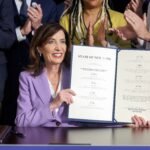
Hochul issued executive orders seeking to ensure pharmacies could administer COVID-19 shots last fall after the Trump administration only recommended them for certain groups. And last month, Hochul signed two pieces of vaccine legislation that aim to help insulate New York from further federal changes.
One requires the state health commissioner to rely on professional medical organizations when shaping the state’s vaccine policies, rather than the federal advisory board that has traditionally been the main source of guidance. The other law requires health insurers to cover vaccines recommended by the commissioner, in addition to those recommended by the federal government.
“When public health comes under attack by an anti-science administration, New York fights back,” Hochul said in her announcement of the new laws.
States have always played a central role in shaping vaccine policies and distribution efforts, said Jason Schwartz, an associate professor of public health at Yale who studies vaccine policy. But, he said, during President Donald Trump’s second term, New York and other blue states have been “stepping forward in making sure that their vaccination efforts are not disrupted or undermined” by federal changes.
At the same time, Schwartz said, there is also an appetite among legislators in many states “for either limiting the role of school vaccination requirements or broadening the ease by which exemptions from those requirements can be obtained.”
Blakeman, the Nassau County executive, did not weigh in on school vaccination policies during his interview with Kane and did not respond to follow-up questions on his position on vaccines. But he did speak to his belief in religious exemptions for mandates in general.
“We need religious freedom in this country,” Blakeman said when Kane asked him about his position on exemptions to vaccine mandates. “Our country was founded on religious freedom.”
Kane, who was fired from his position as a New York City special education teacher during the COVID-19 pandemic for not complying with the vaccine mandate that was in place at the time, wrote after the interview that he was “extremely impressed” with Blakeman.
Blakeman has opposed other strict public health mandates in the past, including through executive orders that loosened mask restrictions in Nassau County during COVID-19.
Assemblymember Jeffrey Dinowitz, a Bronx Democrat who sponsored the summer camp legislation, clapped back against Blakeman’s comments championing religious freedom and calling his bill “un-American.”
“To me, that’s disqualifying,” Dinowitz said. “What’s un-American is not doing everything we can to protect lives, particularly the lives of children.”
A letter the state health department sent to camp directors earlier this year emphasized the importance of children and staff being up to date on their vaccines, but noted that each camp could decide whether to recommend or require specific immunizations.
Summer camps in New York have experienced outbreaks of vaccine-preventable diseases in the past, including three mumps outbreaks and a measles outbreak, the letter stated.