

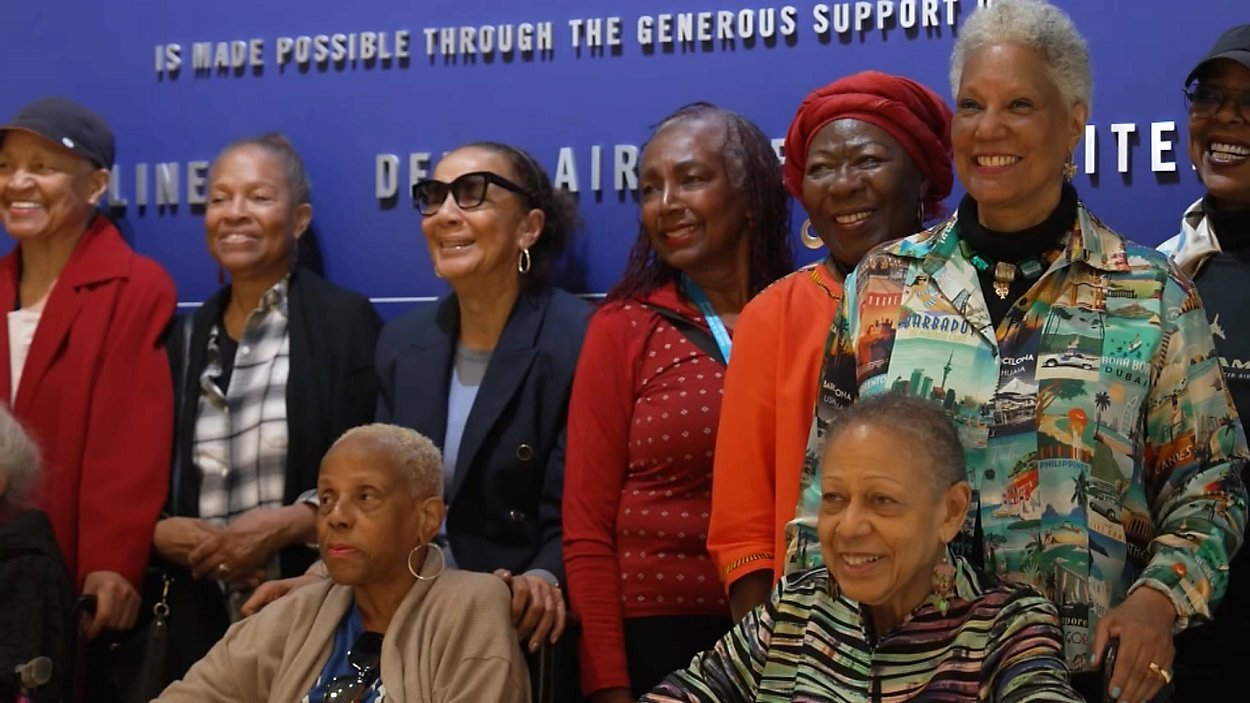
The first Black women hired as flight attendants by the now-defunct Pan American Airways gathered for a reunion in Washington, D.C. this weekend.
“It’s important because we need to celebrate each other. You know, we have so few things to celebrate, and they’re taking — I feel like the world wants to take away things. They want to deny that African-Americans in this country, that we made contributions,” said former flight attendant Dr. Lottie Smith.
The group, affectionately nicknamed the “Pan Am Blackbirds,” toured the Smithsonian National Air and Space Museum in recognition of their contributions to civil rights and commercial aviation.
“We’re Black. We’re fly. And it was the appropriate name,” Blackbird Alice Dear laughed.
The Civil Rights Act of 1964 forced airlines to end discriminatory hiring practices.
“[At the time] there were very few opportunities for Blacks,” Dear said.
“We were just invisible,” she added.
Pan Am hired its first Black flight attendants, including Dear, in 1969.
“I don’t care if [the government] forced [Pan Am] to hire me. That’s not my problem. But once I got there, you know, I was able to make myself proud, make them proud,” Smith said.
“I’m the third generation out of slavery. My mother’s grandfather was a slave,” she explained. “Being able to take my mother out of the country so that she could experience different cultures, different languages, that was a gift.”
Approximately 30 Blackbirds attended this weekend’s reunion.
“With what’s happening now with the elimination of DEI and all of these things that are taking us backwards, I want my grandson to know that, you know, I did things I didn’t just sit home and not go anywhere, not do anything and not know anyone,” said Smith.
The women say the experience propelled them to new heights — both personally and professionally.
“We were like rockstars,” said Smith.
Working for the elite airlines they were invited to meet with several world leaders, many of whom were Black — shifting their perception of what was possible, at a time when opportunities in America were sparse.
Smith explained, “When I got to Africa, I was like, ‘Oh, my God,’ that was mind-blowing to me. I had never been anywhere where everybody was Black,”Smith said.
She used her experience to open the eyes of others as a teacher and adjunct professor.
“I can’t imagine my life. If I had stayed in Milwaukee,” she stated.
Dear leveraged her global ties to build a career in international banking — even earning an appointment from President Bill Clinton to run the African Development Bank.
“We’re capable of doing everything and we need to let people know that,” said Dear.