


The intensifying competition between the US and China in artificial intelligence (AI) continues alongside efforts to cooperate on governance rules, monitor AI-powered cyberattacks, and prevent frontier models from being controlled by non-state actors.
Two distinct approaches to global AI governance are emerging from the US and China, while a third approach is coming from the UN, according to a recent report by the Center for Strategic and International Studies (CSIS).
The number of partner countries in the US-led Silica Initiative, focusing on AI and semiconductor supply chains, reached 24 in June, while, on the other side, some 29 countries joined the rival Chinese-led World Artificial Intelligence Cooperation Organization (WAICO) as founding members, the report published on Sept. 21 showed.
Pax Silica was made up of participants primarily from high-income economies and the US’ security partners in Europe, the Indo-Pacific, the Middle East, and Latin America. WAICO members are, in contrast, from low- and middle-income countries, with Kazakhstan being the only country participating in both initiatives.
The key AI agenda items between the US and China mostly focus on cooperation in tracking AI-powered cyberattacks, China’s access to advanced American models, Washington’s restrictions on open-source Chinese models, and preventing state-of-the-art frontier AI models from falling into the hands of non-state actors.
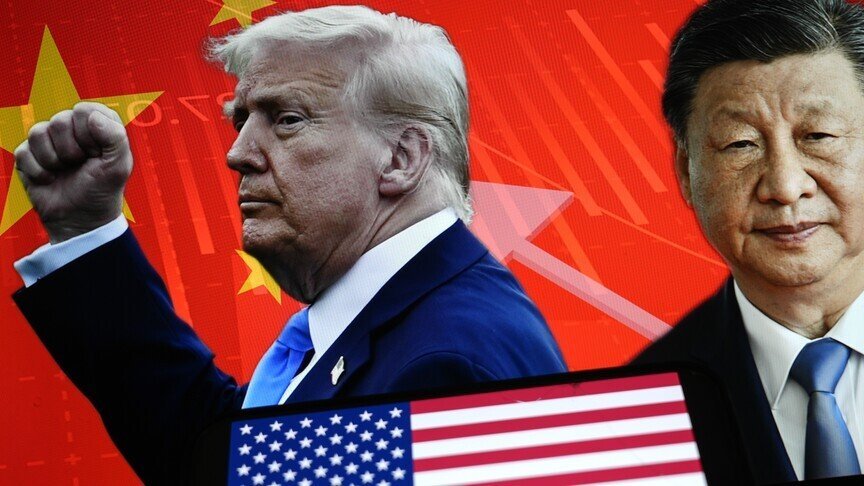
During Chinese President Xi Jinping’s visit to Washington last week, talks between Xi and his American counterpart, Donald Trump, focused on developing AI in a human-centered and controllable way, as well as potential risks.
US, China Cooperate on Global AI Governance Despite Intensifying Competition