

Incumbent governor leads in polls and fundraising as Trump factor, economy, housing and immigration emerge as key election issues
Sadia J. Choudhury
NEW YORK — New York’s 2026 gubernatorial race is entering a critical phase, with just 100 days remaining before voters head to the polls to choose the state’s governor for the next four years.
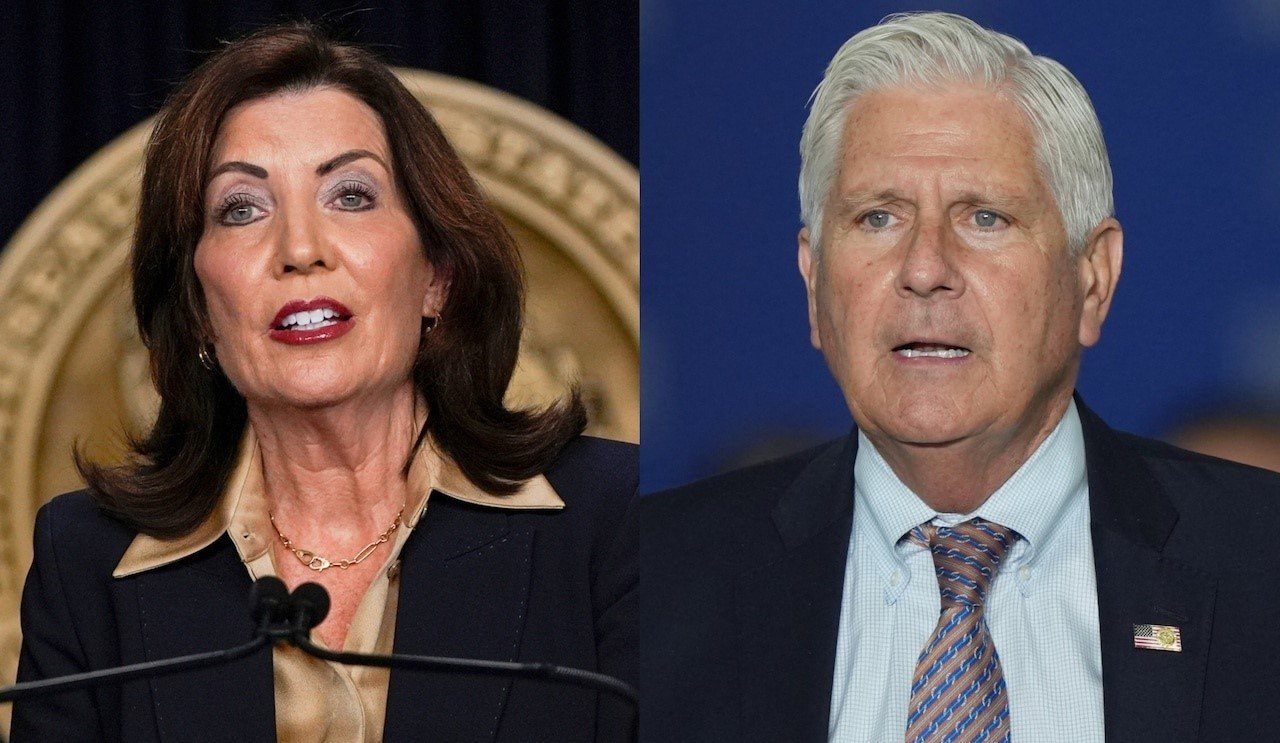
Democratic Gov. Kathy Hochul and Republican Bruce Blakeman, the Nassau County executive, are stepping up their campaigns as Election Day approaches. While both candidates are expressing confidence, Hochul currently holds a significant advantage over her Republican challenger in both polling and fundraising.
According to the latest polling cited by NY1, Hochul leads Blakeman by 20 percentage points in a head-to-head matchup. Her favorability and job approval ratings have also improved in recent months, while she continues to maintain a strong position among Democratic voters and has gained support from independents.
However, political experts caution that the race is far from over. The broader national political climate — particularly the influence of President Donald Trump — is expected to play a major role in shaping the contest.
Trump has endorsed Blakeman, and Republicans are hoping the president’s support will energize conservative voters and strengthen the GOP campaign across the state. State Republican Party Chairman Ed Cox has indicated that Trump could campaign in New York before Election Day.
Democrats, meanwhile, are seeking to make the election a referendum on the Trump administration and national economic conditions. State Democratic Party Chairman Jay Jacobs has pointed to rising food and gas prices and other economic concerns as issues that could influence voters.
The economy and affordability are expected to remain central themes in the campaign. Hochul has made affordability a major focus of her agenda, highlighting initiatives involving child-care subsidies, efforts to reduce car insurance costs and changes to the state’s clean-energy deadlines, which she argued could impose excessive costs.
Blakeman, however, has criticized the Hochul administration over increased state spending and its criminal justice policies. His campaign is expected to focus on fiscal responsibility, public safety, immigration and energy policy.
Immigration is also emerging as a major point of contention. Two law enforcement agencies in Nassau County have agreements with U.S. Immigration and Customs Enforcement, known as 287(g) agreements, allowing cooperation with federal immigration authorities. The issue has become part of the broader political debate between Republicans and Democrats in New York.
The race is also unfolding amid internal debates within the Democratic Party. The growing influence of progressive groups and the Democratic Socialists of America has created new political challenges for Democratic leaders, who are facing pressure to appeal to younger voters while maintaining support among the party’s traditional base.
Hochul also holds a substantial financial advantage. Her campaign has more than $21 million in cash on hand, while Blakeman has raised more than $6 million and has opted to participate in the state’s public campaign matching program.
With 100 days left, the governor’s race is expected to intensify rapidly. Both campaigns will be working to mobilize their political bases, attract independent voters and define the issues that will dominate the final weeks of the election.
For Hochul, the challenge will be to defend her record on affordability, housing, public safety and the economy while maintaining her lead. For Blakeman, the task will be to close the polling gap and convince voters that New York needs a change in leadership.
As Election Day draws closer, the race is increasingly becoming a contest not only between two candidates but also between competing visions for New York’s future — with the economy, affordability, immigration, energy, public safety and the influence of national politics all likely to shape the final outcome.