


When Luis de la Fuente was appointed Spain’s head coach on December 8, 2022, four days after Luis Enrique stepped down following the World Cup Round-of-16 penalty shootout defeat to Morocco, the decision puzzled many.
Here was a coach known almost exclusively for youth and under-23 football, taking charge of a national team many believed would need years simply to become competitive again, with the golden generation of 2008-12 fading into memory.
Three-and-a-half years later, those doubts have been emphatically silenced.
On Sunday, De la Fuente’s Spain defeated Argentina 1-0 after extra time at MetLife Stadium in New Jersey to lift the World Cup, completing a remarkable clean sweep of the Nations League, the UEFA European Championship and football’s biggest prize in the space of four years.
Substitute Ferran Torres settled the final with a 106th-minute volley, moments after Argentina had been reduced to 10 men following Enzo Fernández’s second yellow card.
The triumph also made De la Fuente, at 65 years and 28 days, the oldest manager to win a World Cup, surpassing the record previously held by compatriot Vicente del Bosque, who was 59 when he guided Spain to their first title in 2010.
Yet De la Fuente’s success was never an overnight story. He took bold decisions to reshape Spain’s identity, moving beyond the patient tiki-taka possession game that had defined the country’s greatest era. His side pressed higher and more aggressively, played with greater verticality, attacked with far more purpose and regularly used centre-forwards while delivering significantly more crosses into the penalty area.
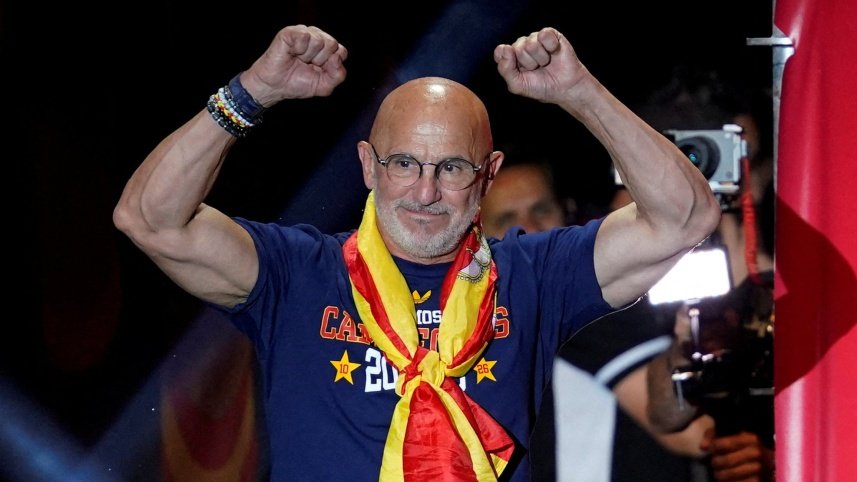
From Spain’s Surprise Pick To Football’s Summit: How De La Fuente Remade Spain