

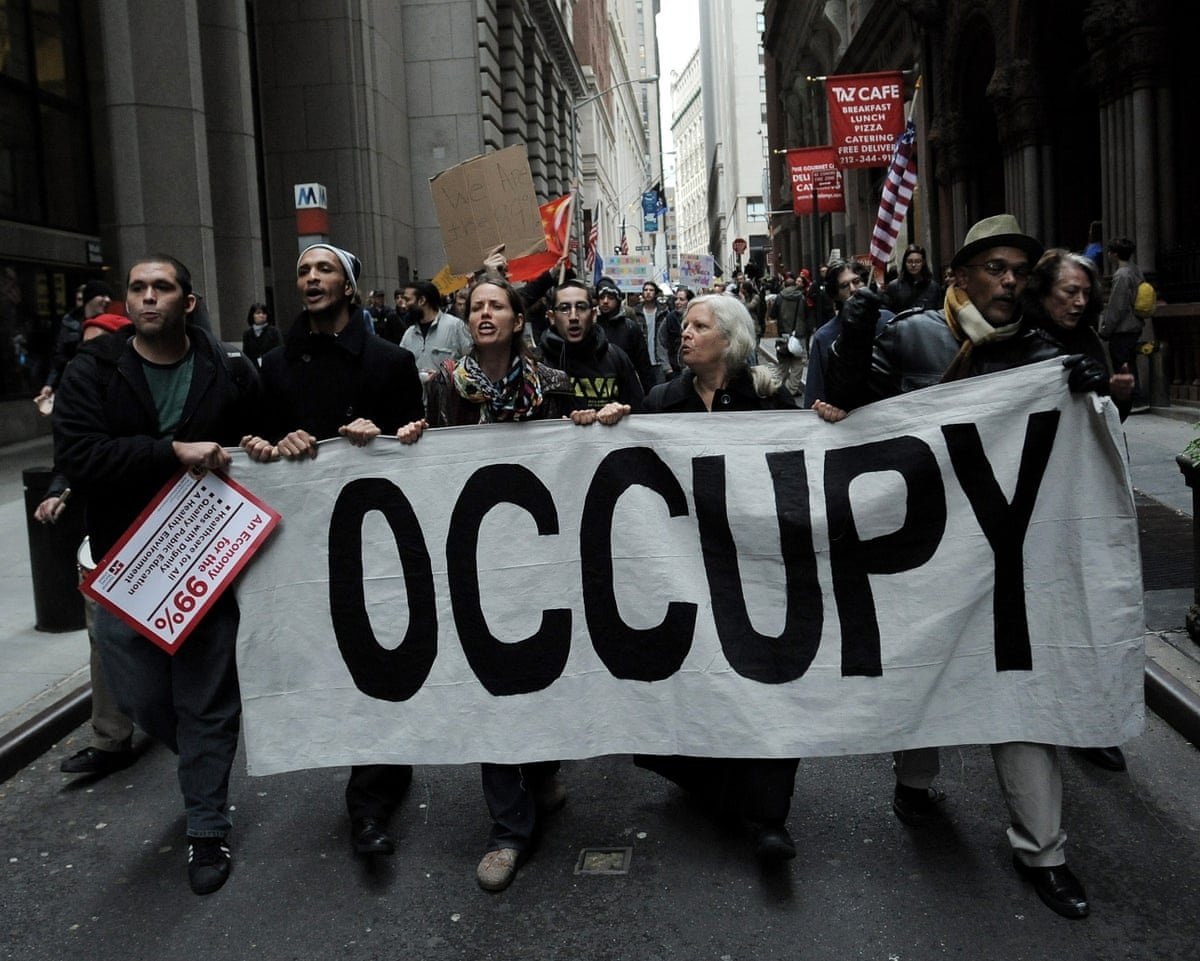
Yotam Marom knows why the Occupy Wall Street movement fell apart 15 years ago. The New York-based organizer and author was a key participant in the nationwide constellation of encampments and rolling protests that brought tens of thousands of people into its fold. But the movement could not withstand police raids, evictions, a bitter winter and, as Marom sees it, an internal “politics of powerlessness”, which mistook a healthy distrust of institutional power for a failure to build a strong, coherent strategy for political change. Occupy splintered within a few short months and never seriously revived.
As he recounts in his new book, For Louder Days: Reaching Beyond a Politics of Powerlessness, Marom has again and again seen similar dynamics weigh down social movements in his work as an organizer and facilitator. He founded the Wildfire Project, a training organization for grassroots groups, and has worked with organizations including the Sunrise Movement agitating against climate decimation, the abolitionist Dream Defenders fighting for racial justice, the Uncommitted movement to end Democratic party support for Israel’s war crimes, tenants unions battling landlords, and more.
A lot has also shifted for the broader left and its relationship to power since 2011: a Democratic socialist is mayor of New York City and a slate of serious leftwing candidates are challenging establishment Democrats for congressional seats.
I first met Marom back in the heady days of Occupy. When we spoke recently, we discussed what movements have learned, what they must continue to learn, and why power must be built through movements, not simply through elected officials.
We’re in this moment in which we’re seeing some winning for the left, including winning actual governing power. I think there is a pretty direct through line from Occupy Wall Street to here. There are a bunch of ways in which we fell short, obviously. But Occupy brought thousands of people into the movement, trained hundreds of leaders, and led to the foundation of a bunch of different organizations. And it changed the public’s common sense around class in this country; it introduced the narrative of the 99% versus the 1%. It’s pretty hard to see how you get something like Bernie [Sanders]’s run in 2016 without that, and now this opening of mass socialist politics, with the elections of the Squad and Zohran [Mamdani] and a slate of DSA [Democratic Socialists of America] candidates in New York.
From Bernie to Mamdani, how the Occupy movement transformed American politics