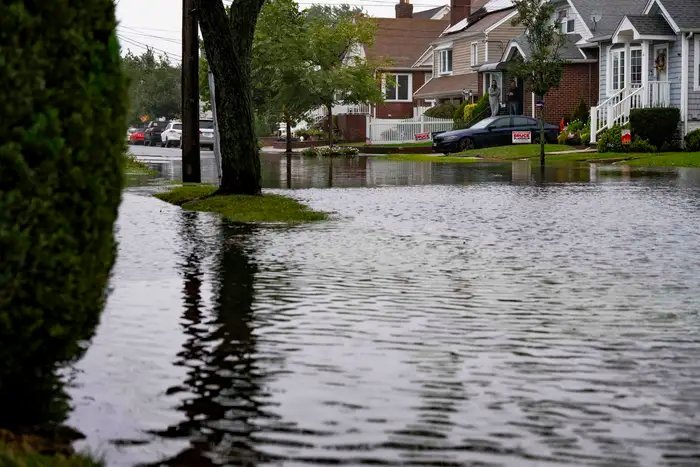
New Yorkers could soon be able to adopt a storm drain on their block and help keep their streets from flooding.
The City Council is considering a bill that would allow residents to volunteer to clear leaves, litter and other debris from storm drain grates, also known as catch basins, that can become clogged during heavy rainfall.
The proposal comes as New York City faces growing flood risks from climate change and an aging sewer system. It would establish a citywide volunteer program to help keep storm drains clear, building on an effort the city’s Department of Environmental Protection has already piloted in Greenpoint, Brooklyn.
Total precipitation in the city is expected to increase by as much as 11% by the 2050s, with climate experts warning that heavier rainfall could cause more infrastructure damage and pose safety risks to residents.
City Councilmember Nantasha Williams said concerns from residents in her Southeast Queens district spurred the bill.
“Flooding has been a major concern in our community, and our office receives so many complaints about clogged catch basins, standing water, and streets flooding whenever we experience heavy rainfall,” Williams said. “We hear from residents who are frustrated because these are issues they continue to deal with, sometimes on the same blocks, over and over again.”
Under the proposed legislation, the Department of Environmental Protection would be required to create an application process for volunteers and report annually on the program’s effectiveness.
Volunteers would agree to clear leaves and litter from storm drain grates at least once a month and when needed before or after rainstorms. They would not be responsible for cleaning inside the drains.
William Scarborough, a longtime Queens resident who heads the Southeast Queens Residents Environmental Justice Coalition, said he welcomed the proposal.
He said volunteers participated in a similar effort to clean catch basins in the area over the summer, but he wants to see the city step up its own maintenance efforts as well.
“I will say that I think what’s needed in addition to that is a regular maintenance schedule to actually clean the catch basins,” he said.
Scarborough noted that volunteers can only clear debris from the tops of catch basins, not clean inside them.
Williams acknowledged that the legislation would not address all of the city’s flooding problems but said residents want to be part of the solution.
“We know that flooding is a much larger infrastructure issue, and this legislation alone will not solve it, but keeping catch basins clear of leaves, litter, and other debris is one practical step that can make a difference,” she said.
The city’s Department of Environmental Protection launched its own Adopt-a-Catch-Basin pilot program last year in Greenpoint, another neighborhood prone to street flooding.
A DEP spokesperson said the agency was already exploring ways to expand the program to other neighborhoods.
“As climate change continues to increase the frequency and intensity of heavy rainfall, DEP is exploring expansion of the pilot program citywide,” said DEP spokesperson Deja Stewart. “We look forward to supporting the stewards, volunteers, and community groups helping to keep catch basins clear in neighborhoods across the five boroughs.”