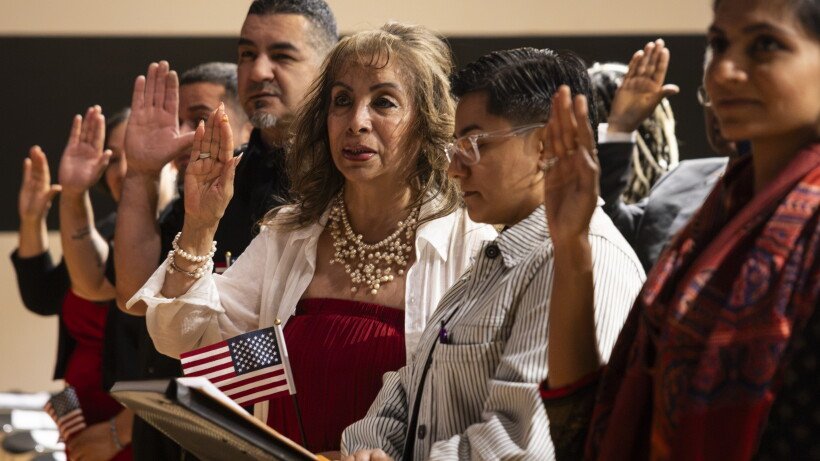
New citizens take oath in Chicago amid immigration concerns, embracing new identities, rights and opportunities.
Sadia J. Choudhury :
Amid growing concerns and uncertainty surrounding U.S. immigration policies, 50 immigrants from 24 countries officially became U.S. citizens during a special naturalization ceremony in Chicago on Monday, November 16.
The ceremony was held at the National Museum of Mexican Art in the city’s Pilsen neighborhood, marking a significant milestone in the lives of the new citizens.
For many, becoming an American citizen represents more than legal recognition. It offers a sense of security, the opportunity to build a permanent future with their families, and the ability to participate fully in the country’s democratic process through voting.
Among the new citizens was 49-year-old Roberto Flores, who arrived in the United States from Mexico at the age of two. After living in the country as a lawful permanent resident for decades, he finally achieved his long-awaited goal of becoming an American citizen. He described the United States as home, where his children were born and raised.
Another new citizen, 73-year-old Rosario Lara, expressed her desire to use her voting rights to support human rights and democratic values. She said concerns surrounding immigration enforcement and arrests had further strengthened her determination to become a citizen.
Congressman Jesús “Chuy” García addressed the gathering, welcoming the new citizens and reflecting on his own family’s immigrant experience. He highlighted the significant contributions immigrants have made to American society and the nation’s development.
The ceremony was presided over by Chief Judge Virginia M. Kendall of the U.S. District Court for the Northern District of Illinois. She emphasized the constitutional rights and responsibilities of citizenship, including religious freedom, freedom of expression and the importance of civic participation.
The event also marked a historic first for the National Museum of Mexican Art, which hosted a naturalization ceremony for the first time in its 44-year history. Following the ceremony, several of the newly sworn-in citizens took the opportunity to register to vote.
For these 50 individuals, the occasion represented more than the completion of a legal process. It marked the beginning of a new chapter defined by belonging, equal rights, civic participation and renewed hope for the future.