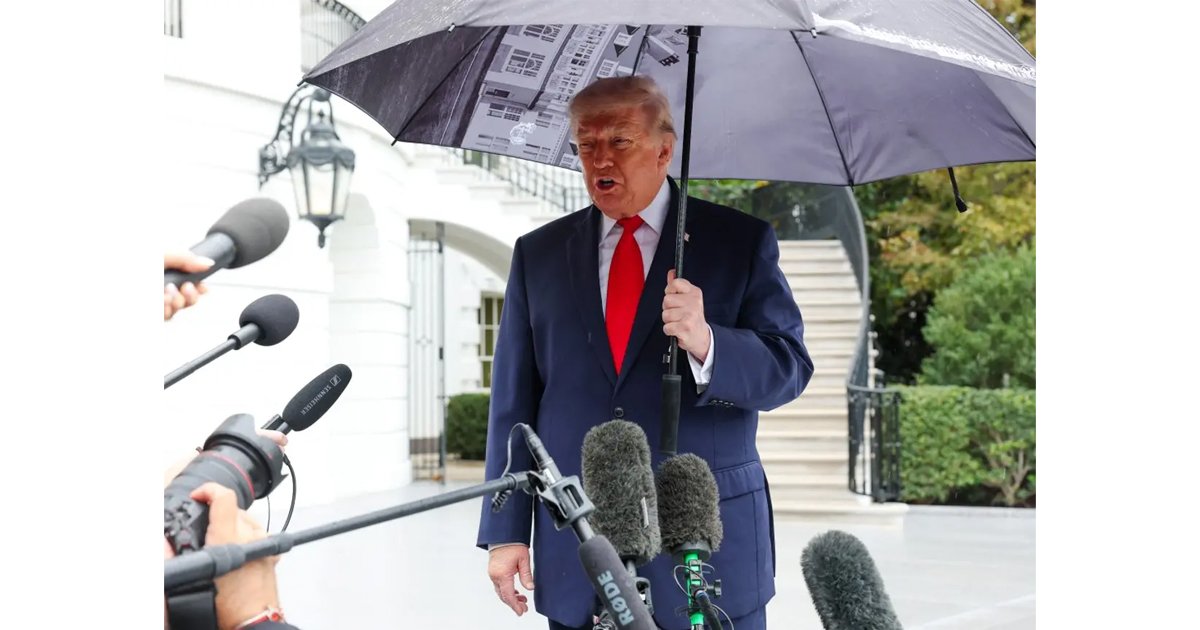
President Signals Possible Deal With Democrats for Longtime Immigrant Workers, Says Deportation Policy May Have Hurt Republicans Politically, While Vowing to Maintain Tough Action Against Criminal Offenders
By Sadia J. Choudhury
— President Donald Trump has acknowledged that his administration’s aggressive immigration enforcement and mass deportation policies may have been too harsh, particularly toward undocumented immigrants who have lived and worked in the United States for many years.
In a significant acknowledgment of the political and economic consequences of his administration’s immigration agenda, Trump suggested that some longtime immigrant workers could potentially receive a path toward a negotiated solution. He also expressed willingness to work with congressional Democrats on the issue.
Trump made the remarks during an interview on CBS’s flagship news program 60 Minutes, broadcast on November 8. The interview came just days after Republicans suffered significant political setbacks in the midterm elections, renewing questions about the impact of the administration’s immigration policies on voters.
Trump Acknowledges Immigration Policy May Have Been Too Strict
During the interview, Trump was asked whether his administration’s mass deportation campaign had gone too far.
The president acknowledged that the policy may have been excessively strict, particularly in cases involving immigrants who had established lives, maintained employment and contributed to the American economy.
Trump indicated that while his administration had received support for strengthening border security and removing individuals involved in serious criminal activity, its enforcement efforts had also affected people who had been working in the country for years.
He recognized that the treatment of longtime immigrant workers had become a politically sensitive issue, creating concerns among employers, families and communities across the country.
Possible Relief for Longtime Immigrant Workers
One of the most significant aspects of Trump’s interview was his discussion of immigrants who have lived in the United States for 10 to 15 years.
The president suggested that people who have spent many years in the country, maintained employment and contributed to the economy could be considered for a negotiated solution.
He specifically mentioned workers in industries such as hotels and landscaping, where immigrant labor plays an important role.
Trump indicated that an agreement with Democrats could help address the circumstances of these workers.
However, he did not announce any specific immigration reform proposal, legal pathway, residency program or timetable. His comments therefore represent an indication of possible negotiations rather than an official change in immigration policy.
Trump Open to Working With Democrats
Trump’s willingness to negotiate with Democrats marks an important development in the ongoing debate over immigration enforcement.
With Democrats gaining greater influence in Congress following the midterm elections, immigration reform could become a significant issue in upcoming legislative discussions.
The president suggested that both parties could find common ground on the treatment of longtime immigrant workers, particularly those who have established employment histories and contributed to American businesses.
Whether such cooperation will lead to legislative action remains uncertain. Any significant changes would likely require negotiations over eligibility requirements, enforcement priorities and the legal status of undocumented residents.
ICE Enforcement Continues to Raise Concerns
The administration’s immigration agenda has largely been implemented through Immigration and Customs Enforcement (ICE), which has conducted arrests, detention operations and deportations across the country.
These enforcement activities have generated widespread concern among immigrant families, business owners and community organizations.
Critics have argued that aggressive enforcement has affected not only individuals accused of serious crimes but also immigrants with no significant criminal histories who have lived and worked in the United States for extended periods.
In several major American cities, immigration raids have prompted protests and calls for greater accountability and oversight of federal enforcement agencies.
Trump’s latest comments, however, do not amount to an announcement that ICE operations will be suspended or broadly reduced.
Tough Enforcement Against Criminal Offenders to Continue
Despite expressing openness to a negotiated solution for longtime immigrant workers, Trump maintained his position that individuals involved in serious criminal activity should face removal from the country.
He reiterated his support for deporting individuals involved in violent crimes, drug trafficking and other serious offenses.
His remarks suggest an effort to distinguish between immigrants who have established longstanding employment and community ties and those considered threats to public safety.
The administration has not yet outlined how such distinctions would be incorporated into its enforcement policies.
Stephen Miller Appointment Adds Another Dimension
The president’s comments have also drawn attention because of his administration’s personnel decisions.
Stephen Miller, widely recognized as one of the principal architects of Trump’s restrictive immigration agenda, has been appointed White House chief of staff.
The appointment has raised questions about how the administration will reconcile its longstanding enforcement priorities with the president’s newly expressed interest in negotiating protections or other arrangements for longtime immigrant workers.
Whether this signals a broader policy adjustment or simply a more targeted approach to enforcement remains to be seen.
Midterm Election Results Put Immigration Policy Under Scrutiny
Immigration emerged as one of the major political issues surrounding the midterm elections.
The Republican Party had made border security and deportation a central part of its political message. However, concerns about enforcement practices, family separation and the treatment of longtime immigrant workers have contributed to a broader national debate.
Trump acknowledged that his immigration agenda had brought both political advantages and disadvantages to Republicans.
The election results have intensified discussions about whether the administration needs to reconsider how its immigration policies are implemented, particularly in communities where immigrant workers are essential to local economies.
What Does This Mean for Immigrant Communities?
For millions of undocumented immigrants across the United States, Trump’s comments have raised questions about the possibility of future immigration relief.
The issue is particularly significant in New York and other major metropolitan areas, where immigrant communities contribute substantially to the hospitality, construction, transportation, landscaping, restaurant and service industries.
For Bangladeshi Americans and other South Asian immigrant communities, the possibility of a negotiated solution for longtime residents is an important development to watch.
Many immigrant families have spent years building businesses, raising children, paying taxes and contributing to their neighborhoods while continuing to face uncertainty over their legal status.
Nevertheless, the president’s interview should not be interpreted as an immediate guarantee of protection from deportation or a new pathway to legal status.
Until specific legislation or formal administrative measures are announced, existing immigration laws and enforcement procedures remain in effect.
The coming months will reveal whether Trump’s remarks lead to meaningful negotiations with Democrats or remain a political acknowledgment of the challenges surrounding his administration’s immigration agenda.
For now, the central question facing immigrant communities remains whether a distinction will ultimately be made between serious criminal offenders and longtime immigrant workers who have spent years contributing to American society.