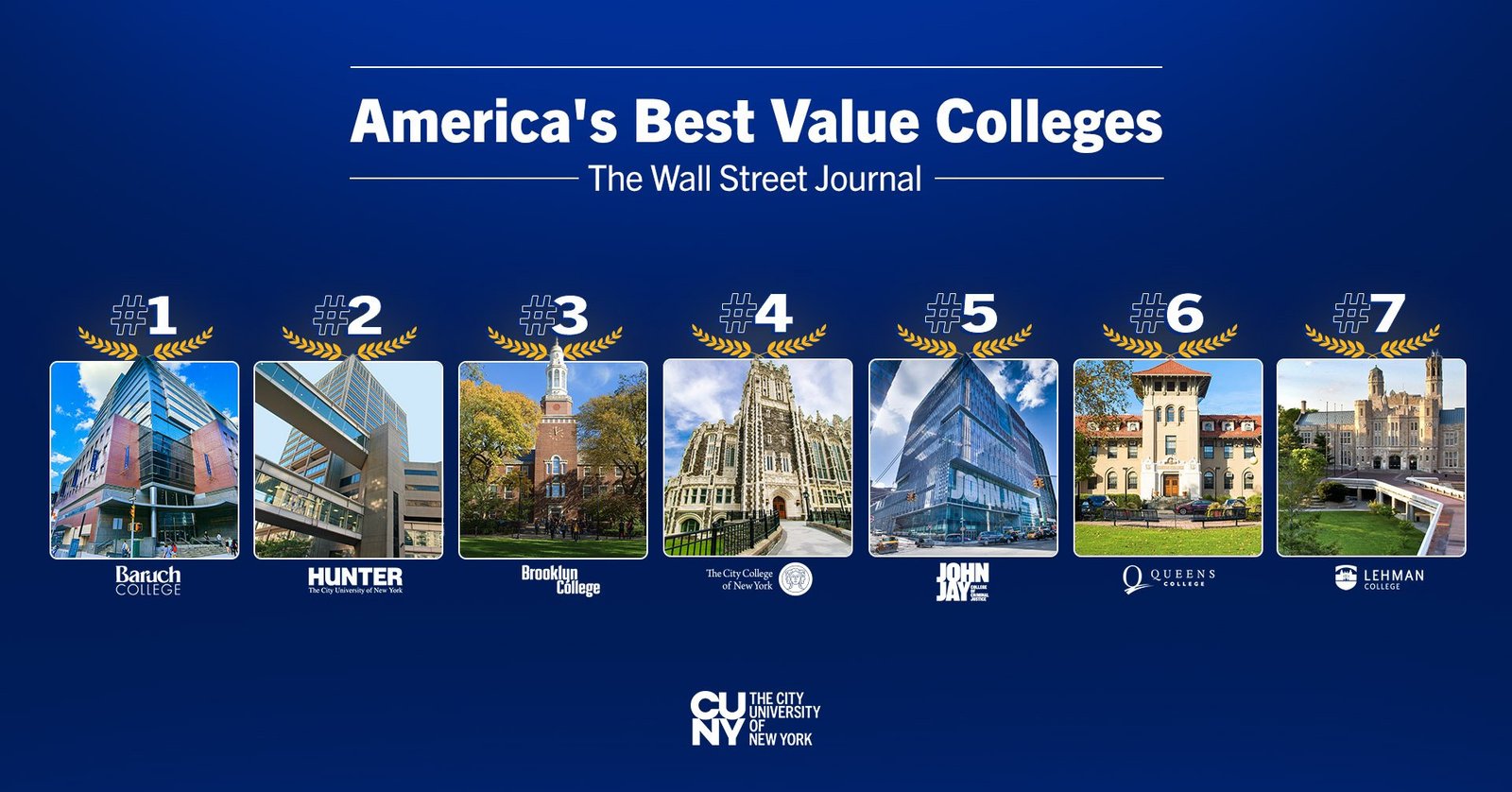
SUNY and CUNY institutions offer promising value for students; Merchant Marine Academy, SUNY Maritime and Baruch College rank among the leading institutions in long-term financial returns
By Sadia J. Choudhury
Choosing a college or university in New York State is no longer just about academic reputation or the quality of education. For many students and families, the financial return on investment (ROI)—how much economic benefit a degree can provide compared with its cost—has become an increasingly important factor.
Recent higher education research suggests that public colleges and universities in New York can offer students strong long-term financial returns, often at a lower cost than private institutions.
According to a 2025 analysis by Georgetown University’s Center on Education and the Workforce, the median 10-year return on investment for public colleges in New York is approximately $207,000, about $33,000 higher than the national median.
Among the institutions highlighted in the analysis, the United States Merchant Marine Academy leads with an estimated 10-year median ROI of approximately $453,000. SUNY Maritime College follows at approximately $340,000, while CUNY Bernard M. Baruch College reports an estimated return of approximately $329,000.
The findings indicate that public institutions can provide substantial financial value because of their relatively affordable tuition and potential post-graduation earnings. However, prestigious private universities, including Columbia University and Cornell University, also remain competitive in long-term financial returns.
Meanwhile, a November 2 analysis by Newsday examined the costs of attending approximately 170 colleges across New York State. The analysis found that students’ annual out-of-pocket expenses, after financial aid and scholarships, can range from a few hundred dollars to more than $59,000.
The report highlights that a college’s published tuition or full attendance cost does not necessarily reflect what a student ultimately pays. Financial aid, scholarships, family income and housing expenses can significantly affect the actual cost of higher education.
For example, Syracuse University’s published annual cost of attendance ranges from $84,632 to $88,493, while the average annual net cost for students receiving federal financial aid was reported at approximately $43,336.
Education experts emphasize that students and families should look beyond a college’s reputation when making enrollment decisions. Tuition and overall expenses, career opportunities, the chosen field of study and potential earnings after graduation should all be considered.
For Bangladeshi-American families in New York, public higher education systems such as the State University of New York (SUNY) and the City University of New York (CUNY) may offer comparatively affordable and promising options.
Ultimately, the best college choice depends on a student’s academic interests, financial circumstances, career goals and the opportunities available in a particular field.
The reported ROI figures are based on historical education costs and earnings data. They should be viewed as indicators for comparing institutions, not guarantees of future income.