


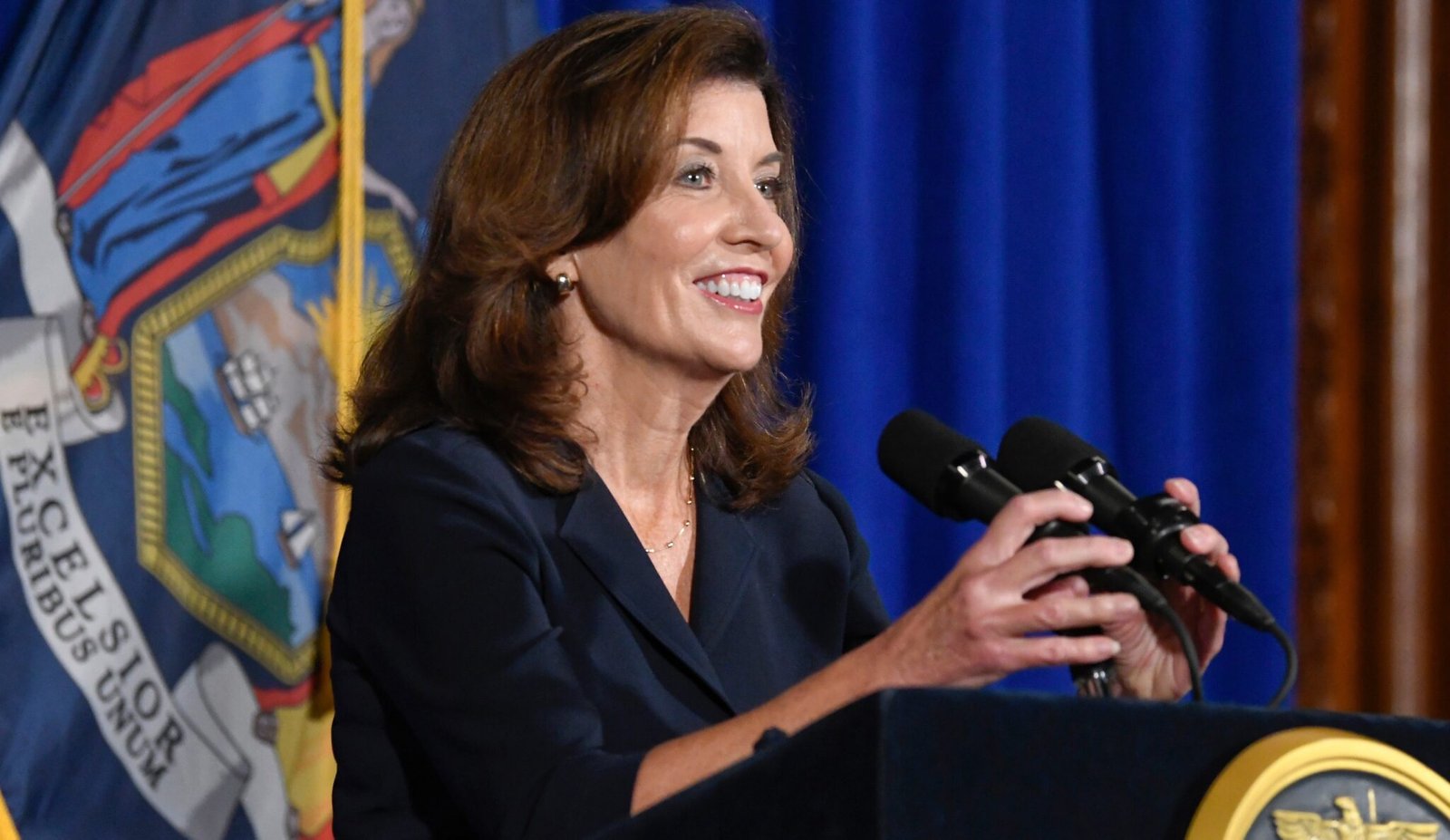
Hochul promised a new political culture. Questions over transparency and executive power remain.
Husneara Choudhury
Five years after Andrew Cuomo resigned as New York governor amid allegations of sexual harassment, a fundamental question continues to echo through Albany: How much has really changed?
Cuomo’s resignation in August 2021 marked a dramatic turning point in New York politics. Lieutenant Governor Kathy Hochul succeeded him, becoming the state’s first woman governor and promising a new era of accountability, transparency and a different political culture.
Five years later, however, debates over executive power, government transparency and political accountability remain part of New York’s political landscape.
The Cuomo era was marked not only by sexual-harassment allegations but also by controversies surrounding the state’s handling of nursing homes during the COVID-19 pandemic and a lucrative book deal involving the former governor. His resignation intensified calls for stronger oversight and greater accountability in state government.
Hochul entered office pledging to change the culture in Albany. Her administration has taken steps on workplace harassment and ethics, while emphasizing transparency and responsible government.
Yet critics argue that changing the person at the top does not necessarily change the way power is exercised.
Recent disputes over major policy decisions and the use of executive authority have renewed questions about whether Albany has truly moved beyond the political culture associated with the Cuomo years.
The issue carries added significance as New York heads toward the 2026 gubernatorial election. Hochul’s record over the past five years will face renewed scrutiny as voters consider whether the promises of a post-Cuomo era have translated into meaningful institutional change.
For many New Yorkers, the question is no longer simply whether Cuomo is gone.
It is whether the political culture that defined his years in power has gone with him.
As Albany looks toward another consequential election, voters will ultimately decide whether the changes promised five years ago represent a genuine transformation—or simply a change in leadership at the top.